The Deal That Just Changed Asian Football's Commercial Playbook
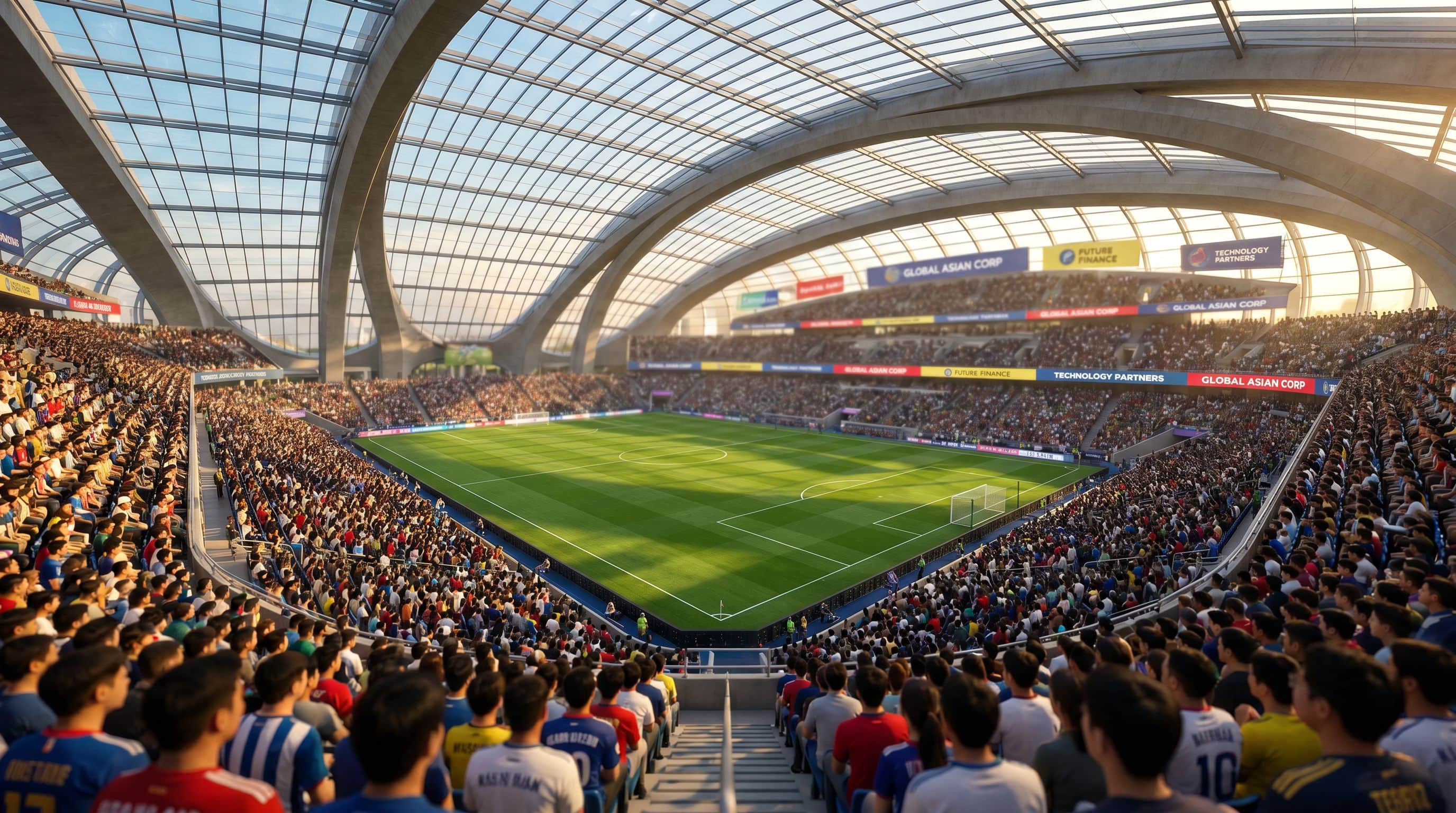
The AFC confirmed this week that Aramco will serve as an Official Global Supporter of the AFC Asian Cup Saudi Arabia 2027, but the real headline is buried in the fine print: the oil giant has secured naming rights to the new Al Khobar stadium, making this the first time in the tournament's 68-year history that stadium naming rights have been offered as part of the commercial package.
This isn't just another energy company sponsorship announcement. The AFC has fundamentally restructured how it monetizes its flagship tournament — and if you manage sponsorship portfolios for sports properties or brands, the implications extend far beyond Doha.
The timing is particularly notable. Just days earlier, Qualcomm secured circuit naming rights for NASCAR's San Diego race, bundling physical branding with intelligent computing and connectivity software integration. Two major deals in one week, both structured around naming rights packages that go well beyond traditional logo placement. That's not coincidence — it's a market signal.
Why This Matters: The AFC Just Unlocked a New Revenue Tier
Let's be direct about what happened here: the AFC looked at how FIFA, UEFA, and major domestic leagues structure their commercial programs and realized they were leaving money on the table.
The Asian Cup has historically operated with a relatively flat sponsorship structure — title sponsors, official partners, and regional supporters. Clean and simple, but it caps your revenue ceiling. You can only sell so many "Official Partner" slots before the category exclusivity becomes worthless.
Stadium naming rights create an entirely new inventory tier that doesn't cannibalize existing partnerships. Aramco can hold naming rights to Al Khobar while another energy company could theoretically still be an "Official Partner" in a different category. (Whether they'd want to is a separate conversation, but structurally, the AFC just expanded their addressable market.)
Here's the math that matters: stadium naming rights in major markets typically command 3-5x the annual value of event-level sponsorships. If Aramco's "Official Global Supporter" designation was worth, say, $15-20 million across the tournament cycle, the stadium naming rights component could reasonably add another $30-50 million to the total package. We're speculating on exact figures — the AFC hasn't disclosed deal terms — but the industry benchmarks are fairly consistent.
The AFC didn't just sign a sponsor. They created a new product category and sold it to the highest bidder. That's the part of this story that should have every property rights holder paying attention.
The Aramco Playbook: What They're Actually Buying
We've spent a lot of time at SponsorFlo analyzing how energy companies structure sports partnerships, and Aramco's approach follows a pattern we've seen accelerate since 2022.
This isn't brand advertising in the traditional sense. Aramco doesn't need to convince consumers to buy their product — most people can't choose their petroleum supplier. What they're purchasing is something more nuanced:
1. Sovereign Alignment The Asian Cup 2027 is Saudi Arabia's tournament. Aramco's sponsorship isn't just supporting football; it's positioning the company as a central pillar of the kingdom's sports and entertainment strategy. When government officials talk about Vision 2030 diversification, Aramco's logo will be on the venues where it's happening.
2. B2B Relationship Infrastructure A stadium naming rights deal creates hosting opportunities that pure event sponsorship doesn't. Aramco can bring partners, suppliers, and government delegations to "their" venue for the next decade. The hospitality value alone often exceeds what brands pay for consumer-facing activations.
3. Narrative Control Energy companies face increasing pressure around sustainability messaging. Sports sponsorship — particularly in world-class modern venues — allows Aramco to associate with innovation, community investment, and forward-looking infrastructure. Whether you think that's legitimate or greenwashing depends on your perspective, but the strategic logic is sound.
4. Long-Term Asset Ownership Here's what most people miss: stadium naming rights typically extend 10-25 years beyond any single tournament. Aramco isn't buying Asian Cup 2027 visibility — they're buying a decade or more of presence in a venue that will host league matches, concerts, corporate events, and community gatherings long after the tournament ends.
This is the evolution from "sponsorship" to "sports infrastructure investment," and it's becoming the default playbook for companies with state-level capital.
The 4-Tier Modern Rights Structure (A Framework)
What we're seeing with both the Aramco and Qualcomm deals this week represents what we've started calling the Modern Rights Stack — a structural shift in how properties package sponsorship inventory. Here's how to think about it:
Tier 1: Title/Presenting Rights The tournament or event carries your name. Maximum visibility, maximum cost, maximum scrutiny. FIFA World Cup Presenting Partner territory.
Tier 2: Category Partnership Exclusive rights within a defined category (automotive, telecommunications, financial services). The bread-and-butter of sports sponsorship for 40 years.
Tier 3: Asset-Specific Rights (NEW) Naming rights to venues, broadcast segments, digital platforms, or specific competition elements. This is where Aramco and Qualcomm are playing. The asset exists independently of the event, creating ongoing value.
Tier 4: Integration Partnerships Technology or service providers embedded in operations — timing systems, connectivity infrastructure, sustainability programs. Often lower visibility but deeper operational involvement.
The Aramco deal is notable because it bundles Tier 2 (Official Global Supporter) with Tier 3 (stadium naming rights) into a single package. That's increasingly how properties will structure their premium offerings: you don't just get event association, you get a tangible, long-duration asset.
For brands evaluating sponsorship opportunities, this changes the ROI calculation entirely. You're not just measuring impressions during event windows — you're amortizing brand value across years of asset utilization.
What the Qualcomm Parallel Tells Us
The fact that Qualcomm's NASCAR circuit naming rights deal landed the same week isn't just interesting timing — it reveals a broader market dynamic.
Qualcomm's deal includes "intelligent computing and connectivity software" integration alongside the naming rights. They're not just putting their name on a track; they're embedding their technology into the fan experience and operational infrastructure.
This is the new baseline expectation for premium naming rights packages. Pure logo placement is table stakes. Sponsors want operational involvement, technology integration, and tangible ways to demonstrate their capabilities to audiences.
We'd expect Aramco's Al Khobar stadium deal to include similar elements — sustainability systems, energy management technology, smart venue infrastructure. The press release didn't specify, but the pattern is consistent enough that we'd bet on it.
For properties selling naming rights, the implication is clear: you need to be prepared to offer integration opportunities, not just branding real estate. That means earlier involvement in venue design and operations, more complex agreement structures, and longer negotiation cycles.
The teams managing these partnerships need systems that can track both traditional deliverables (logo placement, hospitality allocation, media exposure) AND operational integration commitments (technology deployment, sustainability metrics, innovation partnerships). At SponsorFlo, we've built our deliverable tracking capabilities specifically to handle this complexity — because spreadsheets absolutely cannot.
The Regional Ripple Effect
Here's where our analysis diverges from the press release summary: this deal changes the competitive landscape for every sports property in Asia and the Middle East.
For Other AFC Properties: If the Asian Cup can sell stadium naming rights, so can the AFC Champions League, the AFC Cup, and national team qualifiers. We'd expect the AFC to accelerate commercialization of these properties, potentially introducing venue-specific rights packages within the next 18 months.
For Competing Tournaments: The Copa Asia (if CONMEBOL ever gets serious about Asian expansion), any potential expanded Club World Cup presence in the region, and standalone friendlies now have to compete with properties that have established infrastructure sponsorship layers. The entry barrier for premium positioning just increased.
For National Federations: Saudi Arabia, Qatar, UAE, and other regional federations will face pressure to match AFC commercial sophistication. If the continental body is selling stadium naming rights, why isn't the Saudi Pro League doing the same with every new venue?
For Global Brands: Companies that previously viewed Asian football as a second-tier opportunity now see a property with FIFA-level commercial structure. That changes internal budget conversations and strategic prioritization.
The macro story here is that Asian football is becoming commercially competitive with European structures faster than most analysts predicted. The 2022 World Cup accelerated regional infrastructure investment, and now the commercial frameworks are catching up.
The Sovereign Wealth Sponsorship Pattern
We need to address the elephant in the room: Aramco isn't a typical sponsor.
State-adjacent companies — particularly from Gulf Cooperation Council nations — operate with different incentive structures than publicly traded Western corporations. Brand ROI matters, but it's secondary to national strategic objectives.
This creates both opportunity and complexity for properties:
The Opportunity: Sovereign-linked sponsors often bring multi-decade commitment horizons, infrastructure co-investment, and tolerance for premium pricing. They're not going to nickel-and-dime you over hospitality allocations.
The Complexity: Deals with state-adjacent entities invite scrutiny from media, human rights organizations, and other stakeholders. They may create conflicts with potential partners in certain categories. And the relationship dynamics differ — you're not just managing a corporate partnership, you're navigating quasi-diplomatic considerations.
For sponsorship professionals managing these relationships, documentation becomes critical. Every commitment needs to be captured, every deliverable tracked, every modification logged. When deals span government transition periods or involve multiple stakeholder groups, institutional memory matters more than in typical corporate partnerships.
This is precisely why we built SponsorFlo's agreement extraction capabilities — to ensure that complex, long-duration deals don't lose critical details when staff turns over or stakeholders change.
What Properties Should Learn From This Deal
If you manage commercial partnerships for a sports property — whether you're running a regional league, managing a major venue, or building a tournament's sponsorship portfolio — here's what the Aramco deal should teach you:
1. Inventory Innovation Beats Discount Competition The AFC didn't lower prices to attract sponsors. They created new inventory (stadium naming rights) that didn't exist before. If your revenue is plateauing, the answer probably isn't more aggressive sales — it's identifying assets you haven't yet productized.
2. Bundle Strategically Aramco's deal combines event sponsorship with venue naming rights. That bundling creates value for both parties — Aramco gets integrated positioning, the AFC closes a larger total deal. Look for natural bundle opportunities in your portfolio.
3. Plan for Decade-Long Relationships Stadium naming rights aren't three-year deals. They're 10-25 year commitments. That changes how you negotiate, how you structure escalators and performance clauses, and how you manage the relationship post-signature. Most sports organizations aren't operationally built for that timeline.
4. Prepare for Integration Requests Modern premium sponsors want to embed their technology, expertise, or operational capabilities into your property. That means earlier involvement from operations teams in sponsorship discussions, and more sophisticated tracking of non-traditional deliverables.
What Brands Should Learn From This Deal
If you're on the brand side — evaluating sponsorship opportunities, managing existing portfolios, or advising clients — the Aramco playbook suggests several strategic shifts:
1. Asset Ownership > Event Association Events are ephemeral. Venues persist. The most sophisticated sponsors are prioritizing owned or semi-owned assets (stadiums, digital platforms, broadcast properties) over pure event association. The math works better over time.
2. Regional Tournaments Are Maturing The Asian Cup just adopted commercial structures that match or exceed most European properties. If you've been dismissing continental championships as second-tier opportunities, update your assumptions.
3. Bundled Deals Require Portfolio Thinking When deals combine multiple asset types (event + venue + technology), you need portfolio-level analysis, not isolated asset evaluation. That's a capability gap for many brand sponsorship teams.
4. Due Diligence on Hosting Nation Dynamics Deals in hosted markets (where sponsor and hosting nation have alignment) create different value propositions than third-party market deals. Understand what you're buying.
The Prediction: What Happens Next
We'll go on record with some specific predictions about what this deal signals for the next 24 months:
1. At least three more AFC properties will introduce venue-specific rights packages by mid-2027. The Asian Cup has proven the model; the AFC will replicate it across their portfolio.
2. Stadium naming rights will become standard in new Middle Eastern venue RFPs. Every new stadium being planned in Saudi Arabia, Qatar, and UAE will include naming rights as a core commercial assumption, not an afterthought.
3. We'll see at least one major naming rights deal face public controversy around sportwashing concerns. The scrutiny isn't going away, and it will affect how future deals are structured and announced.
4. European leagues will accelerate naming rights commercialization to compete. The Bundesliga has led here, but other major leagues will follow as they see Gulf-funded properties outpacing their commercial sophistication.
5. Technology integration will become a standard component of premium naming rights packages. Pure branding deals will become the exception rather than the rule at the high end of the market.
The Operational Reality Check
Here's what frustrates us about most coverage of these mega-deals: they focus entirely on the announcement and ignore the execution complexity.
Managing a combined event sponsorship and stadium naming rights deal across a decade-plus timeline requires:
- Tracking hundreds of individual deliverables across multiple event cycles
- Managing hospitality allocations that span construction phases, tournament periods, and ongoing venue operations
- Coordinating across multiple stakeholder groups (federation, venue operator, local organizing committee, government entities)
- Maintaining documentation that survives staff turnover on both sides
- Producing ROI reporting that justifies continued investment across economic cycles
Most sports organizations manage this with spreadsheets, shared drives, and institutional memory. That works until it doesn't — which is usually the moment when a key relationship manager leaves and critical context evaporates.
We built SponsorFlo specifically because we saw this pattern repeat across dozens of organizations. Our partner CRM and deliverable tracking capabilities are designed for exactly this scenario: complex, multi-year, multi-stakeholder deals where documentation isn't just operational — it's strategic.
Final Thought: The Market Is Speaking
Two major naming rights deals in one week. Both structured around asset ownership plus technology integration. Both from companies with deep pockets and long-term strategic horizons.
The sponsorship market is telling us something: the premium tier is moving toward infrastructure ownership, and the brands that can play at that level are separating from the pack.
For properties, that means building inventory that can serve these buyers. For brands, it means developing the analytical sophistication to evaluate deals that span decades and combine multiple asset types.
And for everyone in the industry, it means upgrading from spreadsheet-based portfolio management to systems that can actually handle this complexity. The deals are getting more sophisticated — your tools should too.
We'll be watching how the AFC structures the remainder of their 2027 commercial program. If you want to see how AI-powered sponsorship management can help you navigate this evolving landscape, explore what we're building at SponsorFlo.