
Free sponsorship proposal templates
A real proposal. A real contract. Your editor.
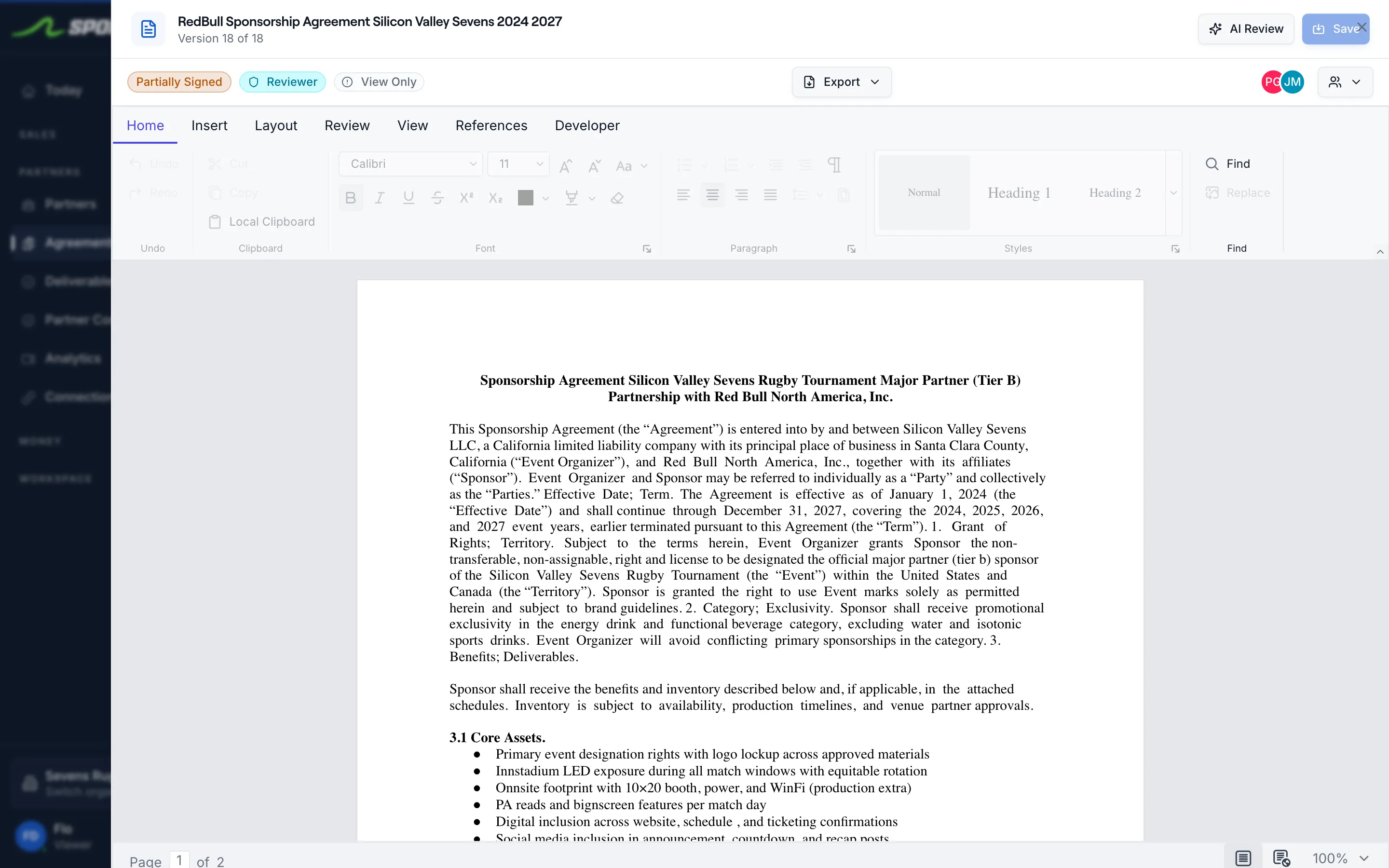
Open the live Gatorade × Sevens Rugby deck, edit a fictional Syncfusion sponsorship agreement in your browser, or download eight filled sample PDFs to adapt offline.
Or edit the sample agreement in Syncfusion · Ungated ZIP download
PDF pack or live editors?
Use both. Study the samples, then build the brand-specific version in SponsorFlo.
Eight filled examples offline
- Youth sports through cause marketing
- Package tiers and deliverables already written
- Ungated ZIP, or emailed from the form above
- Good when you need a structure tonight
Built from the deal in about a minute
- Your inventory, brand, and their logo
- Tracked views on the same record
- Agreement draft from the approved packages
- Exports to PDF, Google Slides, or PowerPoint
Open the real files. Then open the editors.
Public samples from Silicon Valley Sevens Rugby, plus the product surfaces you use to build the next one.
Demo workspace is read-only and needs no signup. Editors open at app.sponsorflo.ai.
From proposal to signed season.
The Sevens sample shows the full loop: deck, agreement, deliverables, and renewal on one partner page.
- 1ProposalBranded deck with packages, mockups, and price
- 2OpenedTracked views tell you when to follow up
- 3AgreementEditor locks fees, exclusivity, and deliverables
- 4SignedPDF saved; installments and tasks created
- 5RenewalNext year’s deck starts from what ran
Slides from a real Sevens Rugby proposal.
These are slides from the Gatorade × Sevens Rugby deck in our demo workspace — cover, audience, inventory, packages, and the ask. Open the live viewer to flip through the finished pitch.
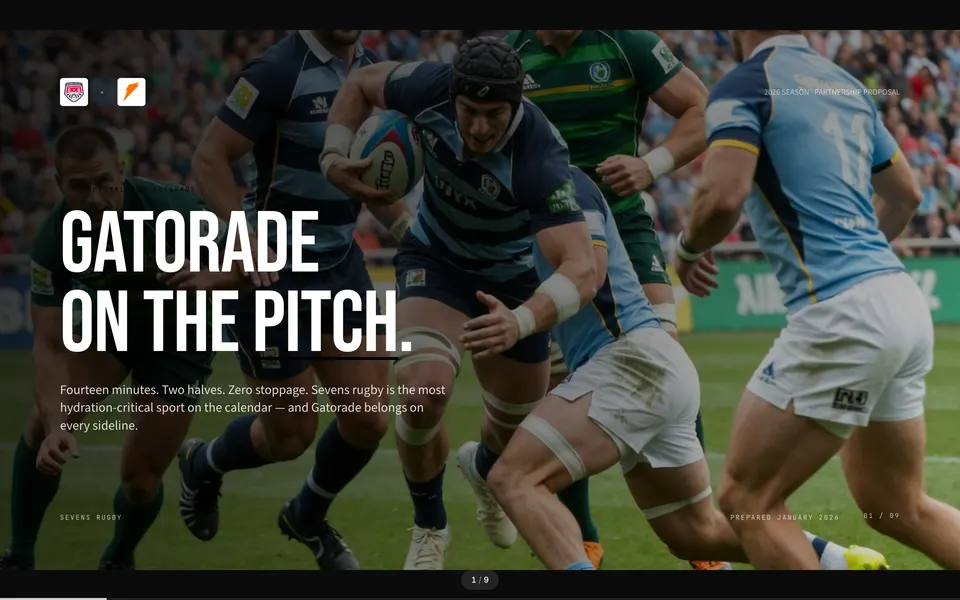 01Cover
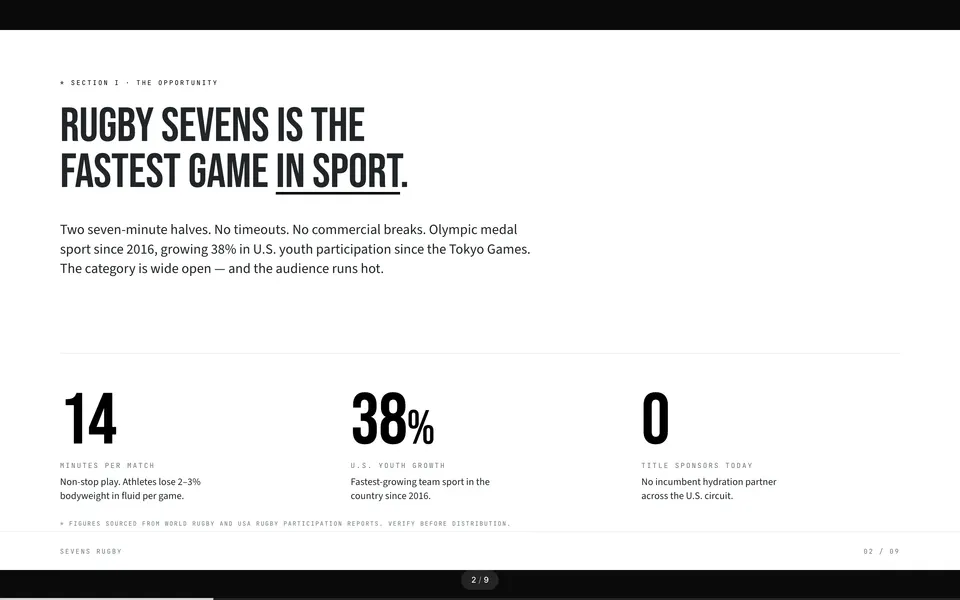 02Opportunity
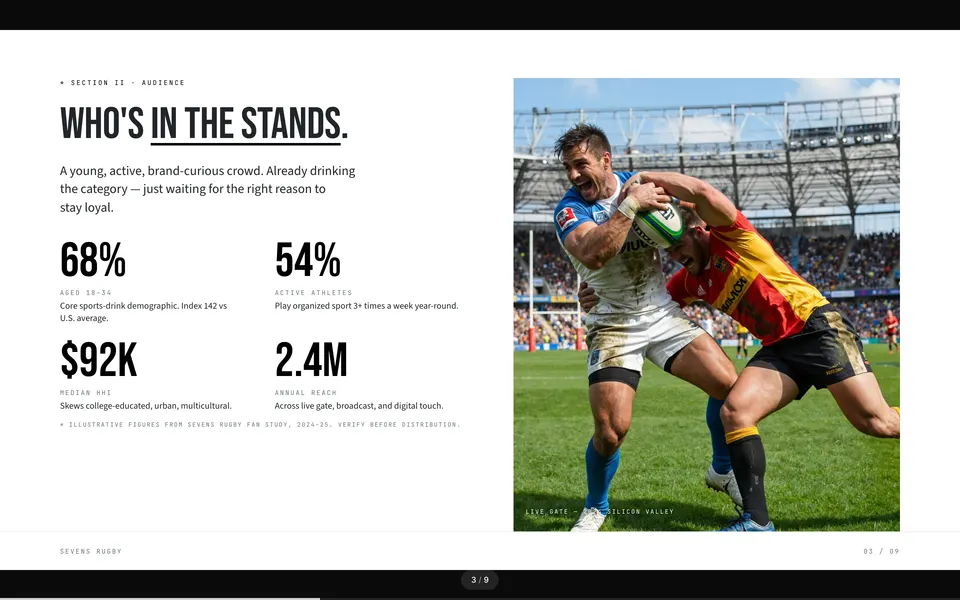 03Audience
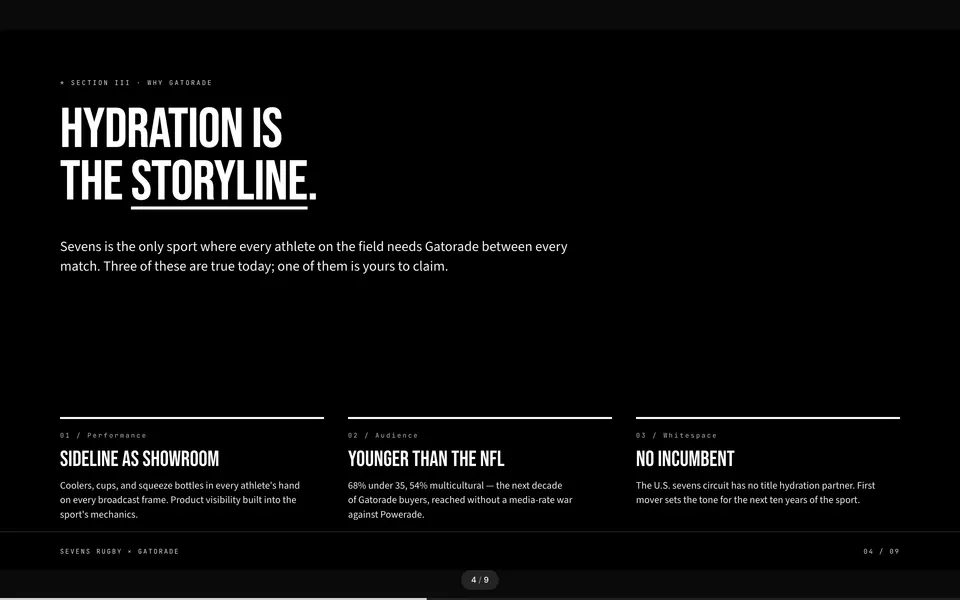 04Fit
04Fit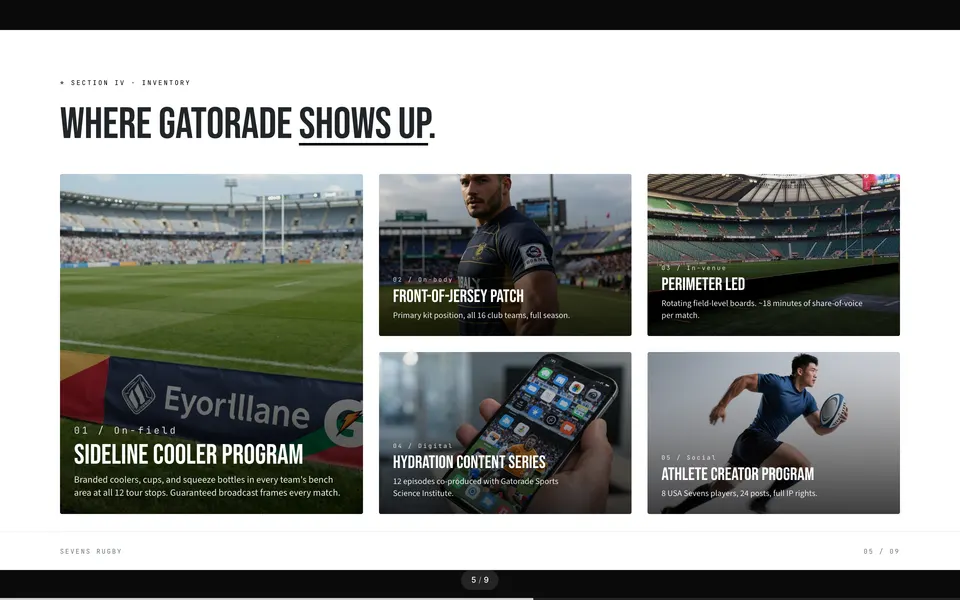 05Placement
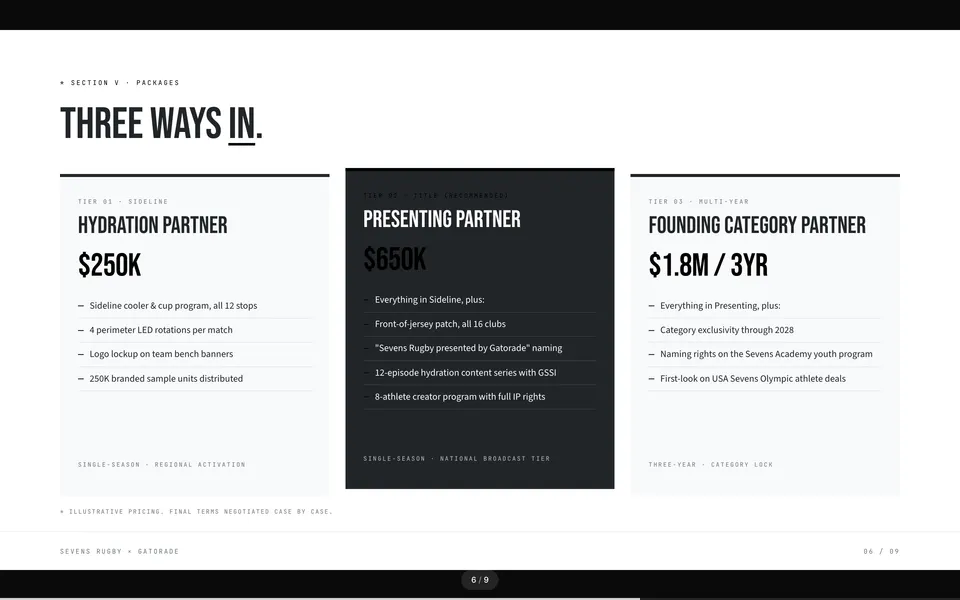 06Packages
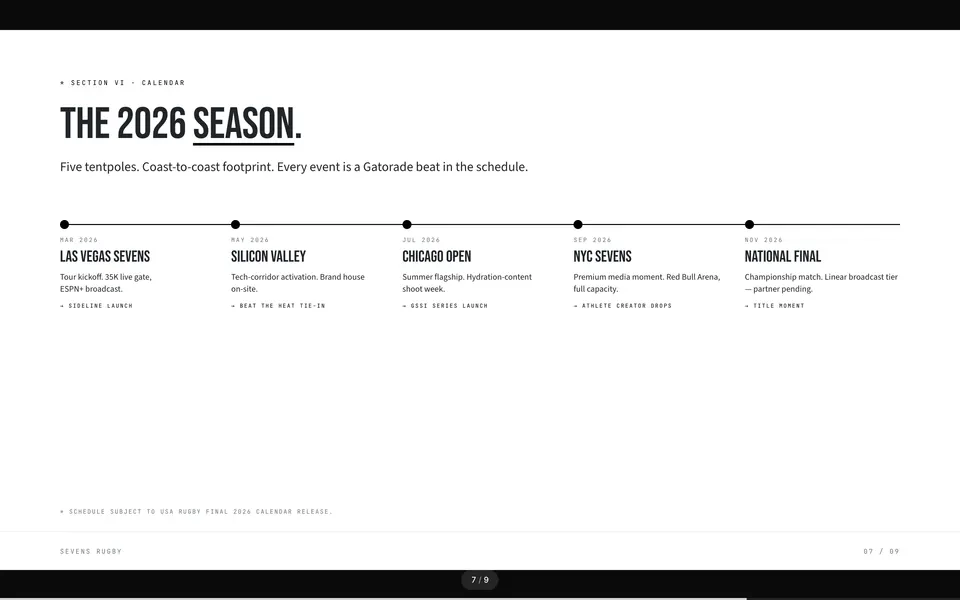 07Calendar
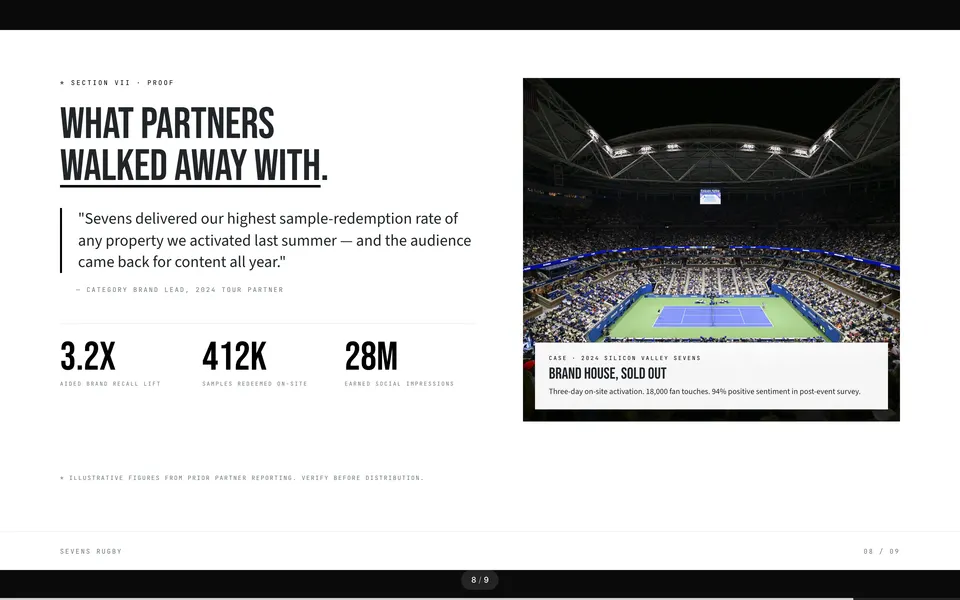 08Proof
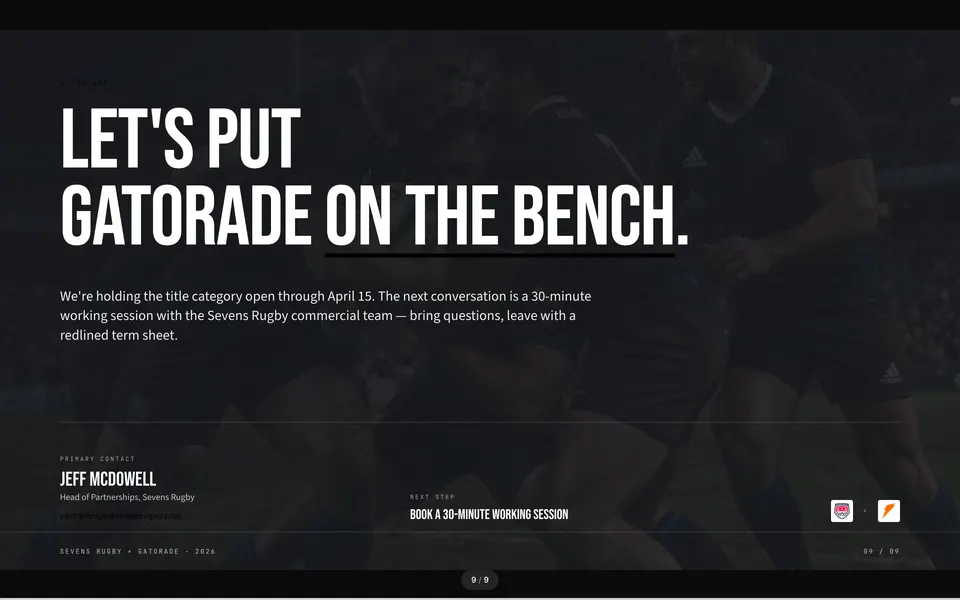 09The ask
The contract lives next to the deck.
After they approve the proposal, redline fees and deliverables in the agreement editor on the same partner page — not a Word file in email.
Questions
Want to build one for your inventory? Open Deck Studio in the live demo.
What is a sponsorship proposal template?
A sponsorship proposal template is a pre-structured deck or document that shows a potential sponsor who you reach, what packages they can buy, the price, and one clear next step. The best ones are filled examples you can adapt, not blank outlines.
Can I open a real proposal instead of downloading a PDF?
Yes. This page links to the live Gatorade × Sevens Rugby deck from our Sevens Rugby demo workspace, and to a fictional Syncfusion agreement you can edit in the browser. You can also open Deck Studio in the live product demo.
What is in the free download pack?
Eight filled sample proposal PDFs covering youth sports, pro teams, athletes, music festivals, conferences, community events, nonprofit galas, and cause marketing. Each includes package tiers, deliverables, and a call to action.
Should I send a PDF or a tracked link?
A tracked link from Deck Studio tells you whether the sponsor opened the proposal and which pages they spent time on. A PDF attachment goes silent. Download the samples to study structure, then send your real pitch as a tracked deck.
Can I edit the Sevens proposal in SponsorFlo?
Yes. Open the live product demo with Deck Studio to build and edit a branded proposal from inventory. The public Gatorade × Sevens link is the sponsor-facing view of a finished deck.
Where does the contract fit?
After the sponsor approves the deck, you draft the agreement in the same partner record. This page includes a fictional Northwind × Sevens sample you can edit in the Syncfusion editor — changes stay in your browser until you start a trial on a real deal.
Read the full sponsorship proposal template guide
How to Write a Sponsorship Proposal That Sponsors Actually Read
A sponsorship proposal is a short document that tells a potential sponsor who your audience is, what the sponsor receives, and how much the partnership costs. The best proposals answer those questions in a predictable order so the reader never has to hunt for the price or guess what they are buying. Start with the live Gatorade × Sevens Rugby deck and the editable Syncfusion agreement sample on this page, then use the eight free sample PDFs when you need an offline structure for another property type.
What is a sponsorship proposal template?
Definition
Sponsorship proposal template
A sponsorship proposal template is a pre-structured document that organizes the information a sponsor needs before they agree to a deal: an overview of the property, audience data, a menu of packages with specific deliverables, pricing, and a single next step. Templates save time because they give you a layout to fill in rather than a blank page.
On this page you can open a finished Deck Studio proposal from Silicon Valley Sevens Rugby and edit a fictional sponsorship agreement in the same Syncfusion editor used in SponsorFlo. The eight sample PDFs in the download pack are additional filled examples — not blank outlines — for youth sports, pro teams, athletes, festivals, conferences, community events, nonprofit galas, and cause marketing, so you can see how the structure changes depending on what you sell.
What should a sponsorship proposal include?
Every sponsorship proposal should include five sections, presented in the order a sponsor reads them. Skipping a section or burying the price at the end of a long narrative are two of the most common reasons proposals stall.
- Organization overview — one paragraph that explains what you run, where you run it, and how often. For example: "River City FC is a 3,000-seat USL club that plays 12 home matches per season at Riverside Stadium in Austin, Texas."
- Audience data — attendance, reach, or registration numbers you can verify, plus demographics like age range, household income, or professional role if you have them. A gate count is better than "thousands of engaged fans."
- Packages and deliverables — three to five tiers, each listing the specific things the sponsor receives: a jersey patch, a 10×10 booth at the expo, a 30-second podcast read, a branded email to your list. Every line should be something you will actually fulfill and can later prove you delivered.
- Pricing and payment terms — the cost of each package in the sponsor's currency, when payment is due, and whether you accept installments or require payment up front.
- One clear next step — reply to schedule a call, sign the attached agreement, or book a meeting through a calendar link. Offering multiple next steps slows the decision instead of speeding it up.
How do you write a sponsorship proposal for different property types?
The five-section structure stays the same, but the details inside each section shift depending on whether you run a youth league, a festival, or a nonprofit gala. Here is how to adjust for the most common property types.
Youth sports and community teams
Lead with the demographics of the families who attend games — parents aged 30–50 with household incomes in a specific range, concentrated in a handful of zip codes. Your deliverables are tangible and local: jersey patches, field banners, PA announcements, and a logo on the team website. Price packages at levels a local business can justify, and include a photo of a past jersey or banner placement so the sponsor can picture the result. The youth sports sample in the download pack shows this structure with a fictional 200-player travel soccer club.
Professional and college teams
Corporate sponsors at this level expect media reach data, a full season schedule, and hospitality options like a suite or a pregame reception. Separate season-long packages from single-game activations, and include a kit mockup that shows the sponsor's logo on the uniform. The professional team sample in the pack uses a fictional basketball franchise to demonstrate broadcast mention frequency, in-arena signage placement, and a hospitality line item.
Individual athletes
An athlete's proposal centers on personal brand reach — social media followers, competition appearances, and content creation rights. List each social platform with its follower count and average engagement, and specify what content the sponsor receives: three Instagram posts per month, one YouTube integration per quarter, or appearance at two brand events per year. The athlete sample in the pack is built around a fictional triathlete with a mid-size social following.
Music festivals and entertainment events
Festival proposals need tiered packages that range from title sponsorship down to a booth or a branded bar. For each tier, specify the physical footprint (booth size, power access, load-in window), the branding placements (stage banner, wristband logo, app listing), and any VIP hospitality included. The music festival sample in the pack shows a fictional three-day outdoor event with four package tiers and a floor-plan diagram.
Conferences and trade shows
B2B sponsors care about the professional role and seniority of attendees more than raw headcount. List attendee demographics by job title or industry vertical, then separate your packages into booth options, speaking or panel slots, and networking receptions. If you offer attendee list access, note the opt-in and permission structure. The conference sample in the pack uses a fictional 1,200-attendee SaaS conference.
Nonprofits and cause marketing
Nonprofit proposals succeed when they frame the sponsorship as a marketing partnership rather than a donation request. Name the program the sponsor would title, describe the audience it reaches, and list deliverables like logo placement on event signage, a co-branded email campaign, or a press release. The nonprofit gala sample in the pack shows a fictional children's literacy nonprofit with table packages and donor recognition tiers, while the cause marketing sample demonstrates a year-long co-branded campaign structure.
How do you make a sponsorship proposal look professional?
Design matters because a polished proposal signals that your organization will execute the partnership with the same care. You do not need a graphic designer, but you do need consistent branding and at least one visual that helps the sponsor imagine the finished placement.
- Use your brand colors, logo, and fonts consistently across every page.
- Include at least one mockup showing the sponsor's logo on your asset — a jersey, a stage banner, a digital ad, or a booth backdrop. SponsorFlo's free AI mockup generator creates these placements from a photo of your asset and the sponsor's logo file.
- Add photos from past events or activations to prove your property is real and well-attended.
- Keep the deck to five pages or fewer — long enough to cover the five sections, short enough that a marketing director reads it in one sitting.
- Export the final version as a PDF so formatting stays intact on any device.
How do you send a sponsorship proposal and track whether it was opened?
Sending a proposal as an email attachment means you never know whether the sponsor opened it, forwarded it internally, or ignored it entirely. SponsorFlo's Deck Studio solves this by sending each deck as a tracked link that reports views back to your dashboard. You can see exactly which sponsors opened your proposal, how many times they viewed it, and who to follow up with today — so your follow-up email arrives at the right moment instead of at an arbitrary interval.
Deck Studio also builds the proposal itself. It pulls your inventory, brand identity, and the sponsor's details to generate a one-deck-per-sponsor proposal with sponsor logo mockups placed on your own asset photos. Each deck has version history, so you can update pricing or add a deliverable without losing the original. If you prefer to work outside SponsorFlo, you can still export the finished deck to PDF.
What happens after the sponsor says yes?
A signed proposal is a commitment, but the partnership is not complete until the contract is signed, the deliverables are fulfilled, and the sponsor receives proof that everything ran as promised. SponsorFlo manages the full lifecycle after the pitch: upload a contract and AI extracts the terms and deliverables, track each deliverable's status and due date with proof attachments like photos or video clips, and invoice the sponsor through a connected Stripe account. Analytics show your pipeline value, conversion rate, and average proposal value so you can see how your outreach is performing across every deal.
If you are just getting started, the eight free sample PDFs give you a structure to follow. When you are ready to move from static documents to a system that builds, sends, and tracks proposals in one place, you can explore a sample account with example sponsors and deals at sponsorflo.ai/demo/live.
Frequently asked questions about sponsorship proposal templates
How long should a sponsorship proposal be?
Five pages is a practical target for most property types. That is enough space to cover your organization overview, audience data, three to five package tiers with deliverables, pricing, and a next step — without forcing the reader to scroll past filler. Pro teams and large festivals with complex hospitality options sometimes run to seven or eight pages, but anything longer risks losing the reader before they reach the price.
Should you send a sponsorship proposal as a PDF or a slide deck?
PDF is the safer format because it preserves your layout on any device and any email client. Slide decks work well for in-person or video-call presentations, but they can reformat unpredictably when the recipient opens them in a different version of PowerPoint or Google Slides. If you use SponsorFlo's Deck Studio, the proposal is sent as a tracked link that renders in the browser, so formatting is never an issue and you get view analytics automatically.
How do you price sponsorship packages?
Start by listing every deliverable you can offer — signage placements, social posts, email sends, hospitality seats, speaking mentions — and estimate the market value of each one based on what comparable properties charge. Group deliverables into three to five tiers so sponsors can choose a level that fits their budget. Price the top tier at roughly three to four times the entry tier to create a clear value ladder. Label any ranges as typical ranges to adjust for your market, since pricing varies widely by geography, audience size, and industry.
Is the sponsorship mockup generator free?
Yes. SponsorFlo's AI mockup generator lets you place a sponsor's logo on your own asset photos — a jersey, a banner, a digital ad — at no cost. You can download the finished image and insert it into any proposal, or generate mockups automatically inside a Deck Studio deck where they appear alongside your packages and pricing.
- Deck Studio — AI Sponsorship Deck Builder — Build a branded proposal from your inventory in under a minute.
- Free AI Mockup Generator — Place a sponsor's logo on your own asset photos.
- Sponsorship Email Templates — Outreach and follow-up emails to pair with your proposal.
- Sponsorship Contract Templates — Free contract samples for partnership agreements and deliverable schedules.
- How to Find Sponsors — A guide to finding, qualifying, and securing sponsors.
- Explore a Sample Account — See example sponsors, deals, and proposals in SponsorFlo.
Related resources
Sponsorship pitch deck templates
Eight slides every sponsor expects
Learn moreResourceSponsorship email templates
Cover notes and follow-ups for sending the deck
Learn moreFeatureAI Deck Builder
Build the branded version from the deal
Learn moreFeatureAI agreement editor
Redline and sign on the same partner page
Learn moreStop starting from a blank page.
Open the live Sevens samples, build your next deck in Deck Studio, or take the PDF pack with you.