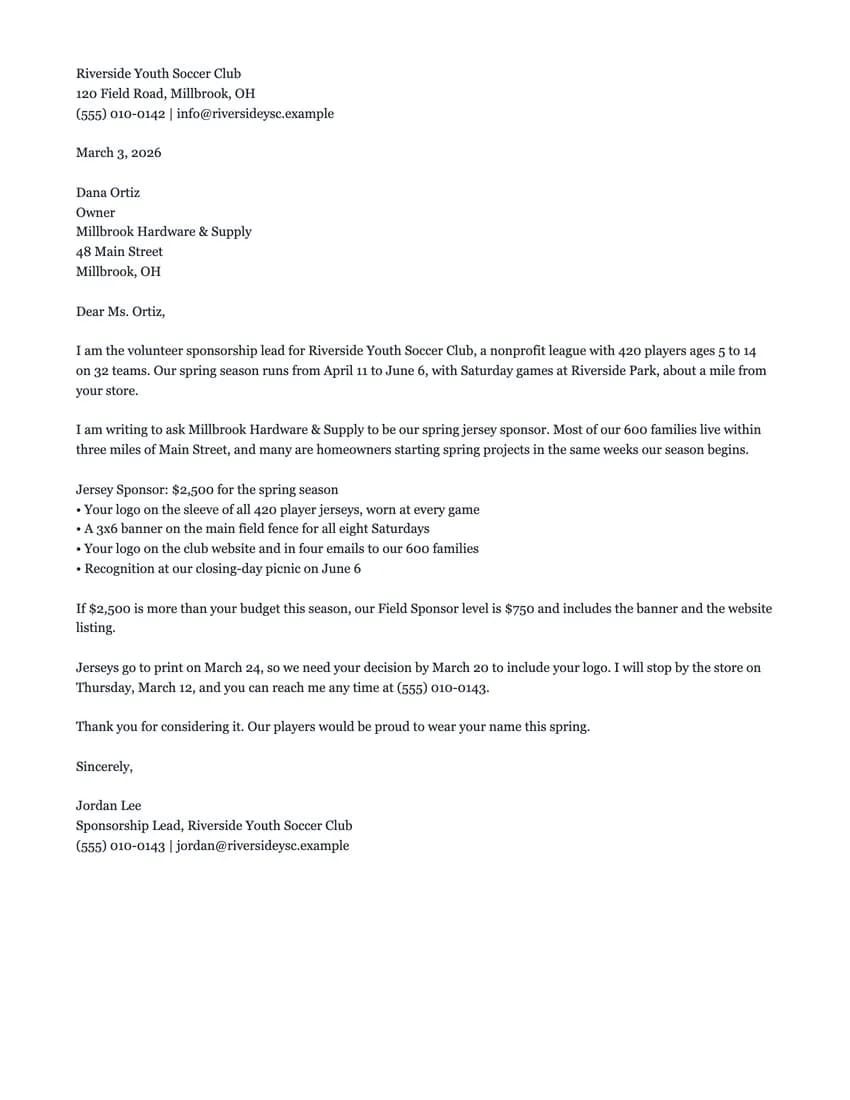
A sponsorship letter is a short, formal request that introduces your organization to a potential sponsor, explains the audience and benefits the sponsor will receive, states a specific dollar amount or package, and closes with a clear next step. The twelve templates above cover corporate sponsors, local businesses, nonprofits, sports teams, community events, conferences, in-kind requests, schools, follow-ups, thank-you letters, and renewals. The questions below cover what to do around the letter: who to send it to, when, and what happens after.
Definition
Sponsorship letter
A sponsorship letter is a one-page written request — sent by mail or email — asking a business or individual to financially support an event, team, program, or organization in exchange for defined benefits such as logo placement, audience access, or brand visibility.
How do you write a corporate sponsorship letter?
A corporate sponsorship letter uses a formal business letter format on your organization's letterhead, addresses a named decision-maker, and leads with the value the sponsorship creates for the company rather than your organization's need for funding. Large companies receive many sponsorship requests, so the opening paragraph must immediately connect your event or audience to a goal the company already cares about — community engagement, reaching a specific demographic, or aligning with a cause that matches their corporate social responsibility priorities.
Research the company before you write. Look at their recent press releases, annual report, or social media channels to identify causes they already support. Then reference that alignment in your first or second paragraph. For example, if a regional bank sponsors youth financial literacy programs and you are running a school fundraiser, open by connecting your program to their existing commitment to financial education.
Should you send a sponsorship letter by email or mail?
Either format works, and the best choice depends on your audience and relationship. A printed letter on letterhead signals formality, which is appropriate for a first approach to a large corporation, a foundation, or a government grant-adjacent request. Email is faster and lets you include a link to a visual proposal deck that the sponsor can click immediately. Many organizations send the letter as an email with the full sponsorship deck attached or linked, then follow up by phone.
If you choose email, paste the body of the letter directly into the message rather than sending it only as an attachment. Attachments often go unread. Use the same structure — organization introduction, audience, benefits, ask, and next step — and add a link to your sponsorship deck or proposal so the reader can see the visual package without downloading a file.
What is the difference between a sponsorship letter and a donation request?
A sponsorship letter asks for financial support in exchange for specific marketing benefits — logo placement, naming rights, booth space, social media promotion — that deliver measurable value to the sponsor's brand. A donation request asks for a charitable gift, often to a 501(c)(3) organization, and the primary return to the donor is the tax deduction and the satisfaction of supporting a cause. In practice, many nonprofit sponsorship letters blend both elements by offering brand visibility and a tax-deductible receipt. The templates above include versions for both scenarios.
How do you follow up after sending a sponsorship letter?
Follow up within five to seven business days of sending the letter. A brief phone call works well because it turns the letter into a conversation and lets you answer questions on the spot. If you cannot reach the contact by phone, send a short follow-up email that references the original letter, restates the ask in one sentence, and offers two or three specific times for a call or meeting.
Keep a record of every follow-up so you know which sponsors have been contacted, when they were last reached, and what their response was. Tracking this information in a spreadsheet or a sponsorship management tool prevents duplicate outreach and helps you prioritize the prospects most likely to commit.
Who should you address a sponsorship letter to?
Address a sponsorship letter to the person who controls the budget you are asking for, by name and title. At a local business that is usually the owner or store manager. At a larger company it is the marketing, brand partnerships, or community relations manager, and the company website, LinkedIn, or a call to the front desk will usually tell you who that is. A named person is far more likely to read the letter than "To whom it may concern."
How far in advance should you send a sponsorship letter?
Send a sponsorship letter as early as the sponsor needs to decide, and work back from your own production deadlines. Local businesses can often decide within a few weeks, so six to eight weeks before a shirt or program print date is usually enough. Larger companies set sponsorship budgets for the year ahead, so approach them several months before the event and ask when their planning cycle closes.
What is the difference between a sponsorship letter and a sponsorship proposal?
A sponsorship letter is a one-page request that introduces you and asks for one commitment, while a sponsorship proposal is a multi-page document or deck with your audience data, every package and price, the activation timeline, and the terms. Send the letter to open the conversation or to a small local sponsor, and attach or link the proposal when the sponsor needs the full picture to decide. The sponsorship proposal template on this site follows the same structure as these letters.
Common mistakes in sponsorship letters
- Starting with your organization's history instead of the sponsor's benefit — the reader wants to know what they get, not a timeline of your founding.
- Using vague asks like 'any support you can offer' — a specific dollar amount or package name gives the reader something concrete to evaluate.
- Sending a generic letter to every prospect — personalization shows the reader the letter was written for them.
- Forgetting the next step — if you do not tell the reader what to do next, they will likely do nothing.
- Writing more than one page — a long letter signals that you have not distilled your value proposition, and busy executives will not finish reading it.