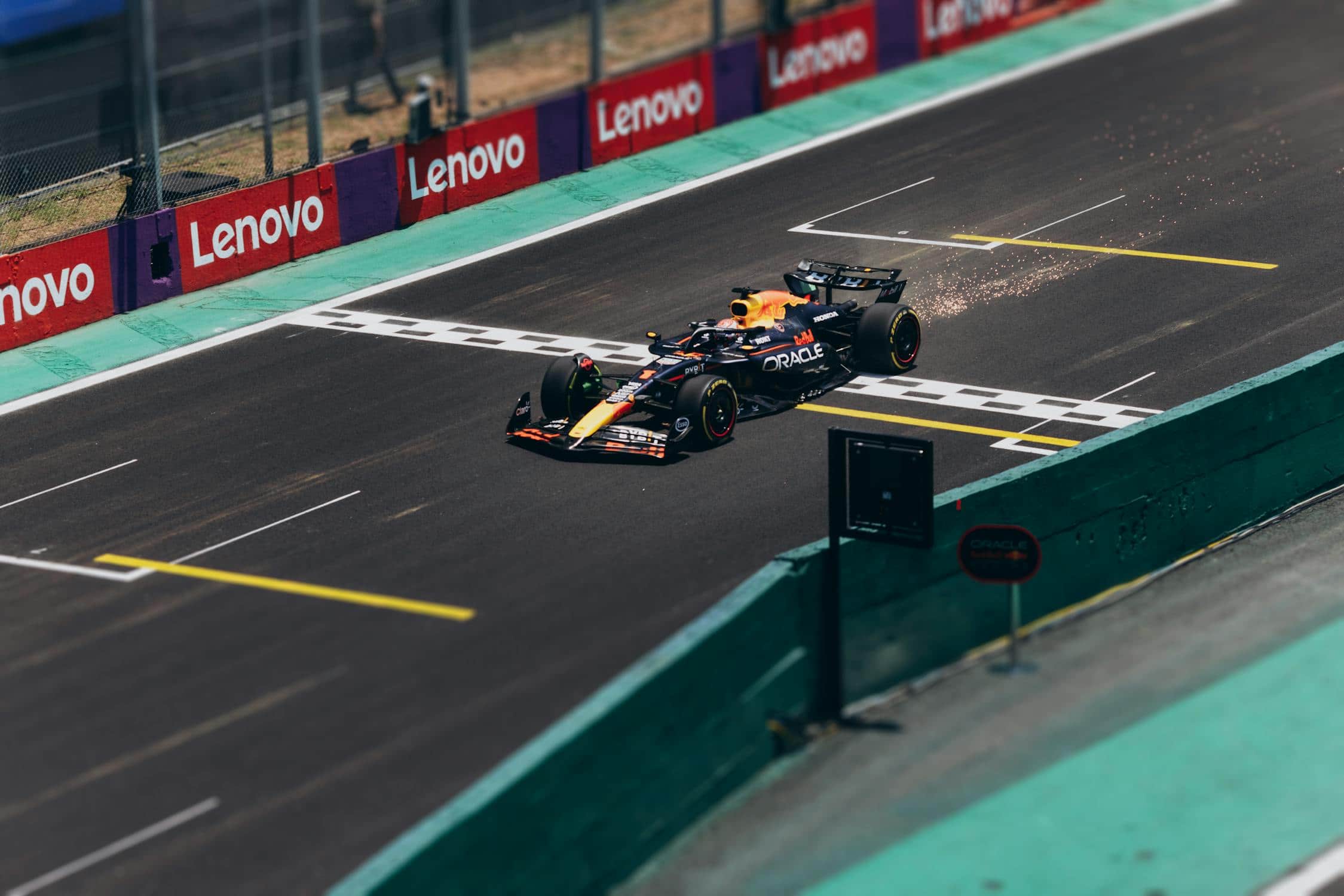
Oracle Red Bull Racing didn’t just renew a sponsorship this week. The team locked in the technology partner that literally runs its race simulations, finances, and employee workflows, ensuring nothing gets left to chance when Formula 1’s radical 2026 regulations arrive. The multi-year extension keeps Oracle as title partner, but more importantly it commits the team to an AI-first operating model powered by Oracle Cloud Infrastructure (OCI), Oracle AI, and the Oracle Fusion SaaS stack.
Why this sponsorship deal hits different
Formula 1 is barrelling toward a new power-unit rule set that will force teams to reinvent how they generate and deploy energy. Laurent Mekies didn’t mince words in Oracle’s announcement: a brand-new Red Bull Ford Powertrains hybrid is being built from the ground up on OCI’s high-performance compute fabric. That’s a seismic shift from most sponsorships that live on liveries. Oracle isn’t paying for signage; it’s underwriting the R&D muscle that allows Red Bull to compress four years of engine design into a workable timeline while rivals like Mercedes and Ferrari lean on decades of institutional IP.
Sportcal’s parallel reporting added that the AI stack includes a race-strategy agent designed to ingest historical data, weather, degradation models, and active aero settings. That’s the kind of black-box capability teams won’t talk about unless the tech partner is literally in the room. The commercial lesson: the most defensible sponsorships are the ones a team can’t operationally unwind without jeopardizing competitive advantage.
OCI becomes the new race shop
F1 outfits used to brag about wind tunnels; today they compare cloud throughput. Oracle is effectively renting Red Bull a hyperscale wind tunnel that never sleeps. OCI’s bare-metal clusters are running thousands of CFD iterations per day to stress-test active aero plans, energy deployment windows, and 2026 tire behavior. Every extra simulation pushes costs lower because the marginal expense of running the next model in the cloud is negligible compared with building physical prototypes. In sponsorship speak, Oracle is converting what would have been CapEx-laden engineering spend into an OpEx partnership check with their logo on the car.
There’s also a finance and HR component most headlines missed. The release spells out how Fusion Applications are handling budgeting, payroll, and marketing analytics. That matters because Red Bull is scaling a nascent power-unit business while simultaneously running two F1 teams and a young driver program. Having Oracle’s ERP as part of the sponsorship means the brand is tied not just to the halo product, but to the governance infrastructure investors care about. That’s a talking point every CRO can borrow: modern sponsors increasingly want to sit inside the data spine, not just on the hood.
AI-powered strategy agents are the new pit wall weapon
The AI strategy agent is more than a fun toy. Oracle’s description hints at a co-pilot that ingests telemetry, historical race scripts, and live timing to surface plays faster than a room full of engineers can scroll through Excel. Imagine getting automated alerts when a safety car probability spikes based on real-time incident clusters, or when fuel numbers drift into a window where an undercut is viable. That closes the latency gap between data and radio call, which is the difference between winning and finishing third.
For sponsorship decision-makers, this is the playbook for how to talk about AI without sounding fluffy. Tie the capability to moments that influence revenue—championship points, hospitality demand, broadcast impressions—and suddenly an AI initiative sounds like a sponsorship valuation story. As platforms like SponsorFlo.ai track for rights holders, the deals that blend product integration with data-driven storytelling hold their value longer because they’re rooted in measurable performance metrics.
Commercial upside beyond the garage
Oracle’s move also future-proofs its enterprise pipeline. The same AI-powered workflow Red Bull uses to reconcile engineering and finance data becomes a reference case for every manufacturing, aerospace, or mobility prospect Oracle is pitching. Expect to see co-branded content this spring that uses Red Bull datasets to illustrate supply-chain planning or scenario modeling. That’s the modern equivalent of track-to-road storytelling—and it tends to convert better than generic product demos.
There’s also a fan monetization angle. Oracle’s marketing cloud already underpins Red Bull’s CRM and loyalty initiatives, and the renewed deal gives the brand license to lean into personalized fan activations tied to the AI stack. Think live-race dashboards, predictive pit-stop visualizations, or VIP experiences built around the new power-unit test lab. Those are the kinds of assets sponsors crave because they drive first-party data collection, which in turn feeds the monetization flywheel.
What this signals for the sponsorship market
If you’re a property operator, the key takeaway is that “AI sponsorship” isn’t a buzzword anymore; it’s an operational dependency. Red Bull can’t realistically unwind Oracle because the cloud infrastructure and software stack are woven into race operations, finance, HR, and marketing. That stickiness increases lifetime value and makes renewals less price-sensitive. Contrast that with standard logo packages, where churn risk spikes every budget cycle.
It also raises the bar for rivals. McLaren answered the Red Bull news within hours by announcing a multi-platform deal with Etihad that includes a Dreamliner livery and dual-series integration. Expect Mercedes, Ferrari, and Aston Martin to showcase their own AI or cloud alliances before Bahrain. Sponsors see that, and they’re going to demand clearer proof that their dollars buy real leverage, not just branding.
For brands outside motorsport, the lesson is to look for properties where your core product solves a mission-critical problem. If you sell decision-intelligence software, target clubs managing dynamic pricing. If you’re a data infrastructure company, align with leagues grappling with biometric governance. Use the Oracle-Red Bull playbook as validation that enterprise-grade integrations make for resilient sponsorship ROI.
The forward view
Red Bull’s dominance forced peers to buy champion drivers; this extension forces them to buy champion data stacks. As SponsorFlo.ai tracks across its deal database, valuations are increasingly tied to whether a sponsor accelerates a club’s ability to monetize its own IP. Oracle just made that case on the biggest stage in motorsport. The hybrid era will be won by whoever can turn AI models into pit wall instincts fastest, and now there’s literally a sponsor paying to make that happen.
The broader takeaway for sponsorship pros: the deals that will survive the next downturn are the ones that weaponize a partner’s core technology. Oracle’s extension proves that when you’re embedded in the product, the marketing line item becomes a strategic necessity, not an optional spend.