
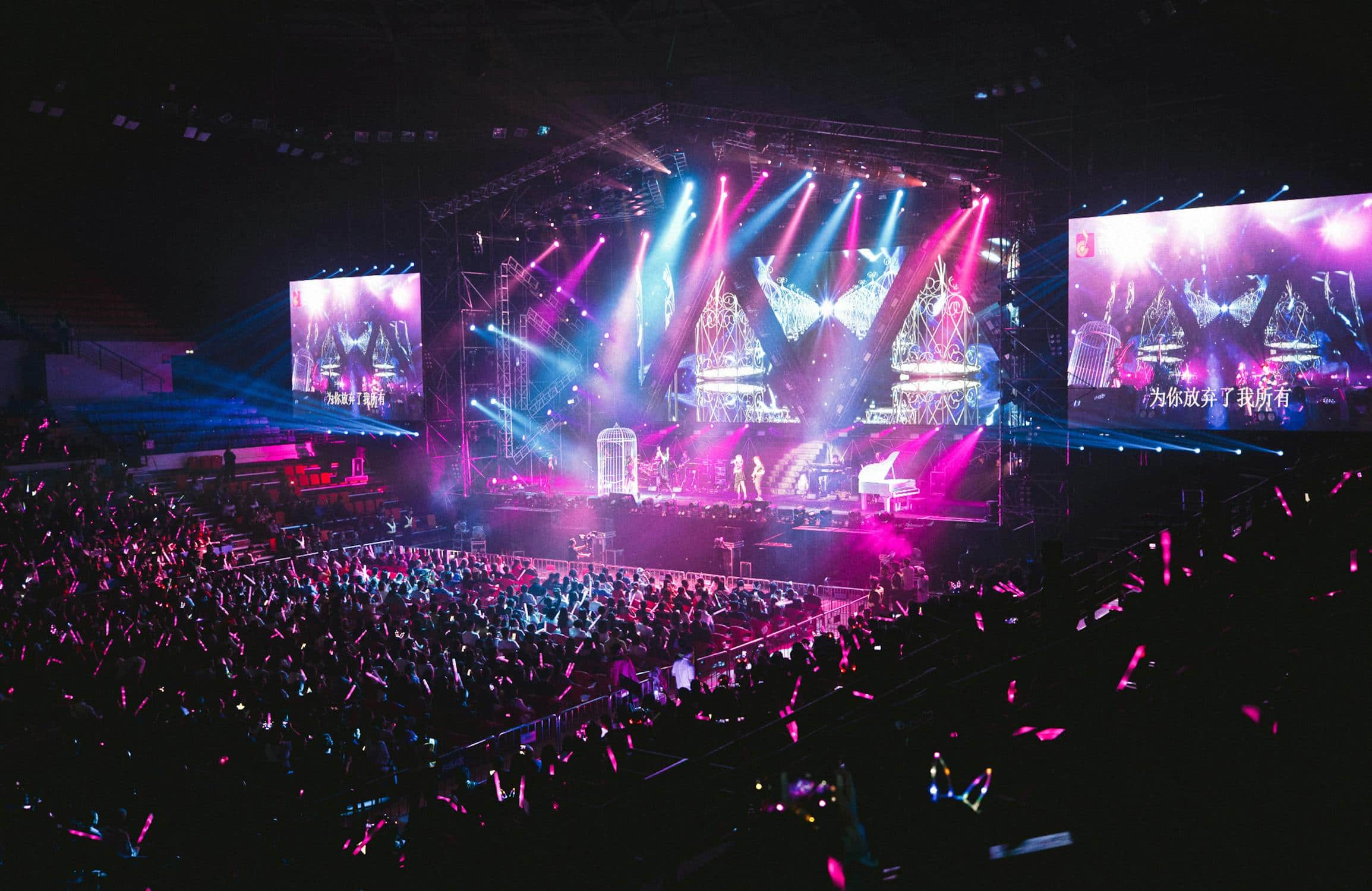
Event sponsorship is a $65 billion global industry—and it's growing. But selling and managing sponsorships for events comes with unique challenges that differ from sports or media properties: compressed timelines, high deliverable complexity, and sponsors who want proof that their investment drove real results.
Whether you're selling sponsorships for a 200-person industry summit or a 50,000-attendee festival, this guide covers the complete lifecycle: prospecting, proposals, pricing, deliverable management, and post-event ROI reporting. We'll also show you how AI is transforming every step—so your team can sell more, manage better, and prove value faster.
Event Sponsorship Package Pricing (Illustrative Ranges)
One of the most common questions from event organizers is simply: what should I charge? Pricing varies enormously by audience size, vertical, and brand strength, but the table below gives illustrative ranges for mid-size events (1,000–10,000 attendees).
| Tier | Investment range | Typical inclusions | Best fit |
|---|---|---|---|
| Title / Presenting | $50K – $250K+ | Naming rights, category exclusivity, top stage placement, content access, premium hospitality | Brand alignment plays |
| Premier | $25K – $75K | Branded zone or stage, keynote intro, premium signage, hosted booth, dedicated email | Vertical category leaders |
| Supporting | $10K – $25K | Standard booth, branded session, attendee list (opt-in), session sponsor | Mid-market ABM plays |
| Track / Session | $5K – $15K | Single track or session sponsor, branded signage, lead capture | Targeted audience reach |
| Activation Partner | $2.5K – $10K | Lounge, swag, charging station, breakfast/coffee, networking sponsor | Brand presence & impressions |
For a working pricing model tied to your specific audience size and CPM benchmarks, run the numbers in our free sponsorship CPM calculator or pull from our sponsorship proposal templates as a starting point.
Sponsorship Strategies by Event Type
Different events call for different sponsorship approaches. The assets you can sell, the audiences you attract, and the metrics sponsors care about vary dramatically depending on format. Here's what works for the most common event categories.
Conferences and Industry Summits
Conferences are sponsorship goldmines because they attract highly targeted, high-intent professional audiences. A B2B technology summit with 1,500 CTOs in the room is infinitely more valuable to an enterprise SaaS company than a billboard seen by 100,000 random commuters.
The most effective conference sponsorship packages focus on thought leadership positioning and lead generation. Top-performing assets include:
- Keynote and session sponsorships — Sponsors present or co-brand a main-stage session, positioning themselves as industry leaders.
- Branded networking lounges — High-traffic areas where sponsors can have organic conversations with attendees.
- Sponsored Wi-Fi, charging stations, and event apps — Digital touchpoints that generate thousands of impressions.
- Lead retrieval and badge scanning access — The single most valuable deliverable for B2B sponsors, giving them qualified leads to follow up with after the event.
- Content marketing integration — On-demand video sponsorship, post-event report branding, and email newsletter inclusions.
For conferences, sponsors typically care about cost per qualified lead more than raw impressions. Structure your event sponsorship proposal around lead volume projections and audience demographics, not just logo placement.
Festivals and Large-Scale Consumer Events
Festival sponsorship management is a different beast entirely. You're dealing with tens of thousands of attendees, massive physical footprints, and sponsors who want experiential activations that generate social media buzz and brand affinity.
Winning festival sponsorship strategies include branded experience zones, product sampling areas, interactive installations, and social media photo opportunities. Sponsors like Red Bull, Coca-Cola, and American Express have set the standard for immersive festival activations that feel like entertainment rather than advertising.
The key metric here is engagement—social mentions, user-generated content, dwell time in activation spaces, and product samples distributed. Make sure your sponsorship management platform can track these experiential KPIs.
Galas, Fundraisers, and Charity Events
Charity event sponsorship appeals to brands seeking CSR alignment and community goodwill. These events typically offer naming rights, table sponsorships, auction item branding, and cause-marketing tie-ins. Sponsors evaluate these opportunities based on brand sentiment lift, executive networking opportunities, and alignment with corporate social responsibility goals.
Trade Shows and Expos
Trade show sponsorship sits at the intersection of conferences and festivals. Sponsors want booth traffic, lead generation, and brand visibility across the show floor. Premium assets include entrance branding, lanyard sponsorships, keynote sponsorships, and exclusive demo theater time slots. The most sophisticated trade show organizers are now offering hybrid sponsorships that bundle physical assets with year-round digital exposure on event platforms.
Prospecting: How to Find the Right Sponsors for Your Event
The biggest mistake event organizers make in sponsorship sales is casting too wide a net. Sending generic proposals to 500 companies yields worse results than sending ten highly targeted, personalized pitches. Effective event sponsorship management starts with strategic prospecting.
Define Your Audience Value Proposition
Before you approach a single sponsor, you need crystal clarity on who your audience is and why that audience is valuable to brands. Build a detailed attendee profile that includes:
- Job titles and seniority levels
- Industries represented
- Company revenue ranges
- Geographic distribution
- Purchasing authority and budgets
- Key pain points and interests
This data is what sponsors are actually buying. A 500-person event with verified VP-level and above attendees from Fortune 1000 companies can command higher sponsorship fees than a 5,000-person event with a mixed, undefined audience.
Build a Targeted Prospect List
Identify companies whose target customer profile overlaps with your attendee demographics. Look at:
- Past sponsors of similar events — Check competitor event websites, conference recaps, and trade publications.
- Exhibitors at adjacent trade shows — Companies already investing in event marketing are warm prospects.
- Companies actively advertising to your audience — Check industry publications, LinkedIn ads targeting your sector, and podcast sponsors in your niche.
- Brands with recent funding or growth announcements — Companies that just raised a Series C or launched a new product have both budget and motivation for brand exposure.
- Current vendors to your attendees — If your event targets restaurant owners, companies selling POS systems, kitchen equipment, and food delivery platforms are natural sponsors.
AI-powered sponsorship management platforms like SponsorFlo AI can dramatically accelerate this process by analyzing your audience data and automatically identifying high-fit sponsor prospects based on firmographic, technographic, and intent signals. Instead of spending weeks building prospect lists manually, your team gets a ranked, scored list of best-fit companies in minutes.
Find the Right Contact
Reaching the right person is half the battle. For most sponsorship deals, you're targeting one of three roles: VP of Marketing, Head of Event Marketing/Field Marketing, or Brand Partnerships Manager. At larger companies, there may be a dedicated sponsorship or strategic partnerships team. At smaller companies, the CEO or founder often makes sponsorship decisions directly.
Avoid going through general inboxes. Use LinkedIn, mutual connections, and industry events to make warm introductions whenever possible.
Crafting Event Sponsorship Proposals That Close
Your event sponsorship proposal is the single most important document in the sales process. A mediocre proposal sends the message that your event—and your management of sponsor relationships—will also be mediocre. Here's how to create proposals that win.
Structure for Skimmability and Impact
Decision-makers are busy. Your proposal should be visually compelling and easy to scan. The ideal structure includes:
- Executive summary — One paragraph on why this sponsorship is a strategic fit for the prospect's specific goals.
- Event overview — Key stats: attendee count, audience demographics, past event highlights, media coverage.
- Audience profile — Detailed breakdown of who attends and why they matter to the sponsor.
- Sponsorship packages — Tiered options (typically 3-4 levels) with clear deliverables and pricing.
- Case studies or testimonials — Social proof from past sponsors showing tangible results.
- Custom activation opportunities — Show the sponsor you've thought specifically about how their brand could come to life at your event.
- ROI projections — Estimated impressions, leads, engagement metrics, and media value.
- Next steps and timeline — Clear deadlines for commitment, asset submission, and payment.
Personalize Every Proposal
Generic tier-based proposals are table stakes. What separates top-performing sponsorship teams is personalization. Reference the prospect's recent marketing campaigns, product launches, or strategic priorities. Explain specifically how your event audience maps to their ideal customer profile. Propose custom activations that align with their brand identity.
"The sponsors who spend the most are the ones who feel the proposal was written specifically for them. Personalization isn't a nice-to-have—it's the difference between a $10K package and a $100K partnership." — Industry veteran, IEG Sponsorship Report
This level of personalization used to require hours of research per prospect. Today, AI tools can pull relevant data about prospect companies—recent news, marketing priorities, audience overlap—and generate tailored proposal drafts in a fraction of the time. This is one of the highest-impact use cases for event sponsorship software.
Pricing Your Sponsorship Packages
Pricing is where many event organizers leave money on the table—or price themselves out of deals. Here are proven approaches:
- Cost-per-attendee benchmarks — B2B conferences typically price title sponsorships at $50-$150 per expected attendee. A 2,000-person event might price its top tier at $100K-$300K.
- Media value equivalency — Calculate the equivalent cost of reaching your audience through paid advertising (LinkedIn ads, programmatic display, etc.) and price sponsorships at a discount to that value.
- Lead-based pricing — For conferences with strong lead-gen assets, price packages based on projected qualified leads delivered. If a sponsor values each lead at $200 and you can deliver 150 leads, a $25,000 package is a no-brainer.
- Tiered with à la carte add-ons — Offer 3-4 core tiers and allow sponsors to add individual assets (e.g., additional email sends, app push notifications, or branded content) for incremental fees.
Always include a premium "custom partnership" tier with no listed price. This signals to large brands that you're open to high-value, bespoke deals that go beyond standard packages.
Managing Deliverables Without Dropping the Ball
Here's the hard truth about event sponsorship management: selling the deal is only half the work. Fulfilling every promised deliverable—on time, at quality—is what determines whether a sponsor renews. And for events with dozens of sponsors and hundreds of individual deliverables, this is where things break down.
The Deliverable Complexity Problem
Consider a mid-size conference with 25 sponsors across four tiers. Each sponsor might have 15-30 individual deliverables: logo placements on signage, website, and printed materials; social media mentions; email inclusions; booth placement; session introductions; branded swag; post-event reports; and more.
That's potentially 500-750 individual deliverables that need to be tracked, assigned, executed, and verified—often within a compressed timeline of 8-12 weeks. Managing this in spreadsheets is a recipe for missed commitments and damaged sponsor relationships.
Build a Deliverable Inventory System
Every event sponsorship team needs a centralized system that:
- Catalogs every available sponsorship asset across all event touchpoints (pre-event, during event, post-event)
- Tracks which assets are sold to which sponsors
- Assigns ownership to specific team members for execution
- Sets due dates and automated reminders for each deliverable
- Logs proof of fulfillment (photos, screenshots, metrics)
- Flags at-risk deliverables before they become missed commitments
A proper sponsorship management platform replaces the chaos of spreadsheets and email threads with a single source of truth. When a sponsor asks, "Did my logo appear on the main stage screen?"—you should be able to pull up a timestamped photo in seconds, not scramble through Dropbox folders.
The Pre-Event, Live-Event, Post-Event Framework
Organize your deliverable management into three phases:
Pre-event (8-12 weeks out): Collect sponsor logos, creative assets, and approval on custom activations. Execute digital deliverables like website placements, email mentions, and social media posts. Confirm all physical signage specs and booth logistics.
Live event (day-of): Deploy a fulfillment team specifically tasked with documenting every sponsor deliverable as it happens. Take photos of all signage. Screenshot digital displays. Record sponsor mentions during sessions. Track attendance at sponsored sessions or activations. This documentation is critical for your post-event report.
Post-event (1-3 weeks after): Compile fulfillment reports, distribute leads to sponsors, send attendee survey data, and deliver on any post-event content commitments (on-demand video, blog recaps, etc.).
Proving ROI: Post-Event Reporting That Drives Renewals
According to the IEG/ESP Sponsorship Survey, the #1 reason sponsors don't renew is a lack of measurable results. It's not pricing. It's not a bad experience. It's the absence of proof that the sponsorship worked. Your post-event report is the most powerful renewal tool you have.
What to Include in Your Sponsorship Fulfillment Report
Every sponsor should receive a comprehensive post-event report within two to three weeks of the event. Include:
- Deliverable fulfillment summary — A checklist of every promised asset with proof of execution (photos, screenshots, timestamps).
- Audience and attendance data — Total attendance, attendee demographics, session attendance for sponsored sessions.
- Impression and reach metrics — Website traffic during the sponsorship period, email open and click rates for sponsored inclusions, social media impressions and engagement on sponsor-tagged posts.
- Lead data — For conferences and trade shows, deliver qualified lead lists with contact details, company information, and engagement signals (sessions attended, booth visits, content downloads).
- Media coverage — Any press mentions, blog features, or media coverage that included the sponsor's branding.
- Estimated media value equivalency — Calculate what the sponsor would have paid to achieve comparable reach and impressions through paid media channels.
- Attendee feedback — Include relevant data from post-event surveys, especially questions about sponsor recall, brand sentiment, and purchase intent.
- Recommendations for next year — Show the sponsor you're already thinking about how to deepen the partnership.
The Renewal Conversation
Don't wait until next year's sponsorship sales cycle to begin the renewal conversation. The best time to discuss renewal is immediately after delivering the post-event report, when results are fresh and the sponsor's team is still buzzing from the event experience.
Offer early-bird renewal pricing or first right of refusal on premium assets. Frame renewal as a strategic advantage—"Lock in your keynote sponsorship now before we open it to the market." Event sponsorship management is ultimately a retention game; it costs 5-7x more to acquire a new sponsor than to renew an existing one.
How AI Is Transforming Event Sponsorship Management
The sponsorship industry has been slow to adopt technology compared to other areas of marketing. Many teams still rely on spreadsheets, email chains, and manual processes that haven't fundamentally changed in two decades. That's changing rapidly as AI-powered tools reshape every stage of the sponsorship lifecycle.
AI-Powered Prospecting
Instead of manually researching potential sponsors, AI can analyze your event's audience data and cross-reference it against millions of company profiles to identify the highest-probability prospects. Machine learning models can score prospects based on historical sponsorship behavior, marketing spend patterns, and audience fit—surfacing opportunities your team would never find through manual research.
Automated Proposal Generation
AI can draft personalized sponsorship proposals in minutes by pulling in relevant prospect data, customizing package recommendations based on the prospect's budget range and marketing priorities, and generating ROI projections based on historical event performance data. Your team reviews and refines—but the hours of manual proposal creation are eliminated.
Intelligent Deliverable Tracking
Modern event sponsorship software uses AI to monitor deliverable execution in real-time, automatically flagging at-risk items and suggesting corrective actions. Computer vision can even verify logo placements in signage photos, and natural language processing can confirm sponsor mentions in session recordings.
Predictive Analytics for Pricing and Renewals
AI models trained on historical sponsorship data can predict optimal pricing for each package, identify sponsors at risk of not renewing, and recommend upsell opportunities based on engagement patterns. This turns sponsorship management from reactive to proactive.
SponsorFlo AI was built specifically to address these challenges. The platform manages the entire sponsorship lifecycle—from AI-powered prospecting and proposal generation to deliverable tracking, billing, and ROI analytics—in a single system designed for the way sponsorship teams actually work.
Building a Scalable Event Sponsorship Operation
Whether you manage one annual conference or a portfolio of 50 events, building a scalable sponsorship operation requires the right combination of people, processes, and technology.
Team Structure
Most high-performing event sponsorship teams split responsibilities across three functions:
- Business development / sales — Focused on prospecting, outreach, and closing new sponsors. Measured on new revenue.
- Account management — Focused on sponsor onboarding, deliverable coordination, and relationship management. Measured on renewal rate and sponsor satisfaction.
- Fulfillment and operations — Focused on executing deliverables, collecting proof of performance, and compiling post-event reports. Measured on fulfillment accuracy and timeliness.
Smaller teams often combine these roles, but the functions should still be clearly defined. The most common failure mode is having salespeople who are too busy closing new deals to properly manage existing sponsor relationships.
Process and Workflow Design
Document your sponsorship workflow end-to-end. Create templates for proposals, agreements, onboarding checklists, deliverable trackers, and post-event reports. Standardize your sales pipeline stages. Build repeatable playbooks so that new team members can ramp up quickly and institutional knowledge doesn't walk out the door when someone leaves.
For event portfolios, create a master asset inventory that can be adapted per event. This prevents your team from reinventing the wheel for every event and ensures consistent quality across your portfolio.
Technology Stack
The minimum technology requirements for a professional event sponsorship operation include:
- Sponsorship CRM — Track every prospect, deal, and sponsor relationship in one place. Generic CRMs like Salesforce can work but require heavy customization for sponsorship workflows.
- Asset and deliverable management — A system to catalog sponsorship inventory, track fulfillment, and store proof of performance.
- Proposal and agreement tools — Streamlined creation, e-signature capability, and version control.
- Analytics and reporting — Automated post-event reports that pull in data from multiple sources.
- Billing and invoicing — Track payment schedules, issue invoices, and manage multi-event contracts.
Most teams cobble this together from five or six different tools—and the gaps between those tools are where things fall through the cracks. A purpose-built sponsorship management platform that consolidates these functions into one system eliminates data silos, reduces manual work, and gives your leadership team real-time visibility into pipeline, revenue, and fulfillment status across all events.
Common Mistakes in Event Sponsorship Management (and How to Avoid Them)
After working with hundreds of sponsorship teams, these are the most frequent pitfalls we see—and they're all avoidable.
1. Selling Logos Instead of Outcomes
Too many event sponsorship proposals are built around "your logo here" placements. Modern sponsors don't care about logos—they care about leads, engagement, and brand perception. Reframe every asset in terms of the outcome it delivers. A lanyard sponsorship isn't "logo on 5,000 lanyards." It's "5,000 daily brand impressions among verified senior decision-makers."
2. Treating All Sponsors the Same
A title sponsor investing $250,000 should have a fundamentally different experience than a $5,000 booth sponsor. Tiered service levels, dedicated account managers for top-tier partners, and priority communication set the tone. Your highest-value sponsors should feel like strategic partners, not line items.
3. Waiting Too Long to Start Selling
The most successful event sponsorship teams begin outreach 9-12 months before the event for major conferences, and 6-9 months out for smaller events. Brands plan their marketing budgets quarterly or annually—if you reach out eight weeks before your event, you've already missed most budget cycles.
4. Neglecting the Post-Event Window
The two weeks after your event are the highest-leverage period for sponsor retention. Sponsors are emotionally engaged, their teams just experienced the event firsthand, and results data is fresh. Waiting three months to send a fulfillment report is a missed opportunity. Deliver reports within 14 days and initiate renewal conversations immediately.
5. Managing Everything in Spreadsheets
Spreadsheets break when you scale past five sponsors or two events. Formulas break, version control is nonexistent, multiple team members overwrite each other's work, and there's no audit trail. If your sponsorship revenue exceeds $100,000 annually, investing in dedicated event sponsorship software pays for itself through efficiency gains and reduced errors alone.
The Future of Event Sponsorship: Trends for 2026 and Beyond
The event sponsorship landscape is evolving rapidly. Here are the trends shaping the industry in 2026:
Data-driven sponsorship pricing: Static rate cards are giving way to dynamic pricing models informed by real-time audience data, historical performance, and market demand. Events with rich first-party attendee data can command premium pricing because they can prove audience quality.
Year-round partnerships: The smartest event properties are moving away from transactional, one-time sponsorships toward 365-day partnerships that include digital content, community access, webinars, and ongoing brand integration beyond the event dates. This increases sponsor lifetime value and creates more predictable revenue.
Hybrid event sponsorships: Even as in-person events have fully returned, the hybrid model—combining physical and digital sponsorship assets—is here to stay. Sponsors expect to reach both in-person attendees and virtual audiences, and events that offer integrated packages across both formats win bigger deals.
Sustainability-linked sponsorships: ESG priorities are influencing sponsorship decisions at major brands. Events that can offer carbon-offset sponsorships, sustainable activation options, and measurable environmental impact metrics are increasingly attractive to corporate sponsors with sustainability mandates.
AI as standard operating procedure: By late 2026, AI-assisted prospecting, proposal generation, and fulfillment tracking will be table stakes for professional sponsorship operations—not a competitive advantage, but a baseline expectation. Teams that haven't adopted AI-powered tools will find themselves at a significant disadvantage in both efficiency and results.
Getting Started: Your Event Sponsorship Management Action Plan
If you're looking to professionalize and scale your event sponsorship operation, here's a practical roadmap:
- Audit your current state. Map your existing sponsorship process end-to-end. Identify bottlenecks, manual tasks, and points of failure. Survey your sponsors on their experience.
- Build your audience data foundation. Invest in collecting, cleaning, and enriching your attendee data. This is the foundation of your value proposition to sponsors.
- Create a standardized asset inventory. Catalog every sponsorship asset across your event(s) with clear descriptions, quantities, and historical performance data.
- Develop templated but customizable proposals. Build a proposal framework that can be quickly personalized for each prospect while maintaining professional quality and brand consistency.
- Implement a sponsorship management platform. Replace spreadsheets and disconnected tools with a centralized system that manages your pipeline, deliverables, billing, and reporting. Explore platforms that are purpose-built for sponsorship workflows rather than adapted from generic CRM or project management tools.
- Establish your measurement framework. Define the KPIs you'll track and report for every sponsorship. Set up data collection processes during the event so you're not scrambling after it ends.
- Build a renewal engine. Create a systematic process for post-event reporting, renewal outreach, and multi-year partnership development. Your best future revenue source is your current sponsor roster.
Event sponsorship management is equal parts sales, project management, relationship building, and data analytics. The teams that master all four—supported by the right technology—are the ones building sponsorship programs that grow year over year. The opportunity is enormous. The tools to seize it have never been better. Now it's about execution.