On this page
- Why sponsorships matter
- 1. Ideal sponsor profile
- 2. Tiered packages
- 3. Personalized deck
- 4. Past conference sponsors
- 5. Industry-aligned brands
- 6. Lead with attendee data
- 7. Unique activations
- 8. Multi-channel outreach
- 9. Start early
- 10. Track opens and follow up
- 11. Proof of performance
- 12. Renewal campaign
- Tools that help
- Common mistakes
- Your action plan
- In depth
Why do conference sponsorships matter?
Sponsorships fund the parts of a conference that registration fees alone rarely cover: keynote speaker fees, venue upgrades, networking receptions, and production quality. For sponsors, a conference is one of the few chances to meet hundreds of decision-makers in one room.
Sponsors can demo products on a booth floor and attach their brand to a trusted industry event. Here is what to expect from conference sponsorship revenue.
Sponsorship carries the budget
Sponsorship often covers a large share of a conference budget, though it varies widely by event type and size.Timing matters
Many corporate marketing budgets are planned six to twelve months ahead, which means your outreach window opens long before the event date.Renewals drive growth
Sponsors who receive clear proof of performance, such as booth traffic, leads collected, and media impressions, are far more likely to return the following year.
This guide breaks the sponsorship process into twelve steps, from defining the type of company you want to target all the way through post-event proof of performance that earns a renewal. Whether you're organizing a developer summit, an academic symposium, or a regional trade show, the strategies below will help you build a repeatable system for finding and closing conference sponsors.
What makes a good conference sponsor?
A good conference sponsor sells products or services that map directly to the people in your audience. A developer conference draws tool vendors, a medical conference draws device and pharma companies, and an education conference draws edtech platforms.
Industry alignment
Tech conferences: SaaS companies, cloud providers, developer tools. Academic conferences: publishers, research institutions, academic software. Medical conferences: pharma, medical devices, healthcare IT.Attendee demographic match
The sponsor's target customer should be well represented in your attendee list. If your attendees are engineering leaders, tool vendors and recruiting platforms are strong matches.Budget and company size
$2K–$10K: local businesses, startups, and SMBs. $10K–$50K: mid-market companies. $50K–$500K+: enterprise and Fortune 500 brands.Geographic relevance
Regional conferences attract regional sponsors, while national or international events can draw global brand budgets. Match your prospect list to the scope of your event.
| Profile field | Developer Summit |
|---|---|
| Conference | Developer Summit (1,500 attendees) |
| Target sponsors | SaaS tools, cloud platforms, developer tools, recruiting platforms |
| Company size | $10M–$500M revenue |
| Audience match | Software developers, CTOs, engineering leaders |
| Package range | $5K (exhibitor booth) to $100K (title sponsor) |
How should you tier conference sponsorship packages?
Tiered packages let you serve sponsors at different budget levels while keeping your most valuable inventory, such as title naming rights, keynote introductions, and exclusive receptions, reserved for the top tier. Most conferences use three to five tiers.
Title or presenting sponsor
One exclusive buyer gets their name on the event, keynote introduction rights, the largest booth footprint, and access to the attendee list. This tier often includes category exclusivity so no direct competitor can sponsor alongside them.Session or workshop sponsor
The sponsor funds a breakout session or workshop and can suggest the topic, subject to your editorial approval. Their logo appears on session signage and in the conference app.Booth or exhibitor package
A defined floor space with power, load-in details, and Wi-Fi. Include a floor-plan image in your deck so the sponsor can see exactly where their booth sits relative to foot traffic.Reception or networking sponsor
The sponsor brands a reception, happy hour, or lunch. If attendee data is part of the package, spell out the data-sharing terms in the contract.
Price each tier based on the audience size, the market your conference operates in, and what comparable events charge. Listing early-bird pricing on the deck with a specific expiration date gives prospects a reason to commit sooner.
How do you personalize a conference sponsorship deck?
Personalize the deck by adding the sponsor's logo on a mockup of your booth signage, referencing their product category, and naming the attendee titles they care about. A generic deck that reads the same for every prospect is easy to ignore.
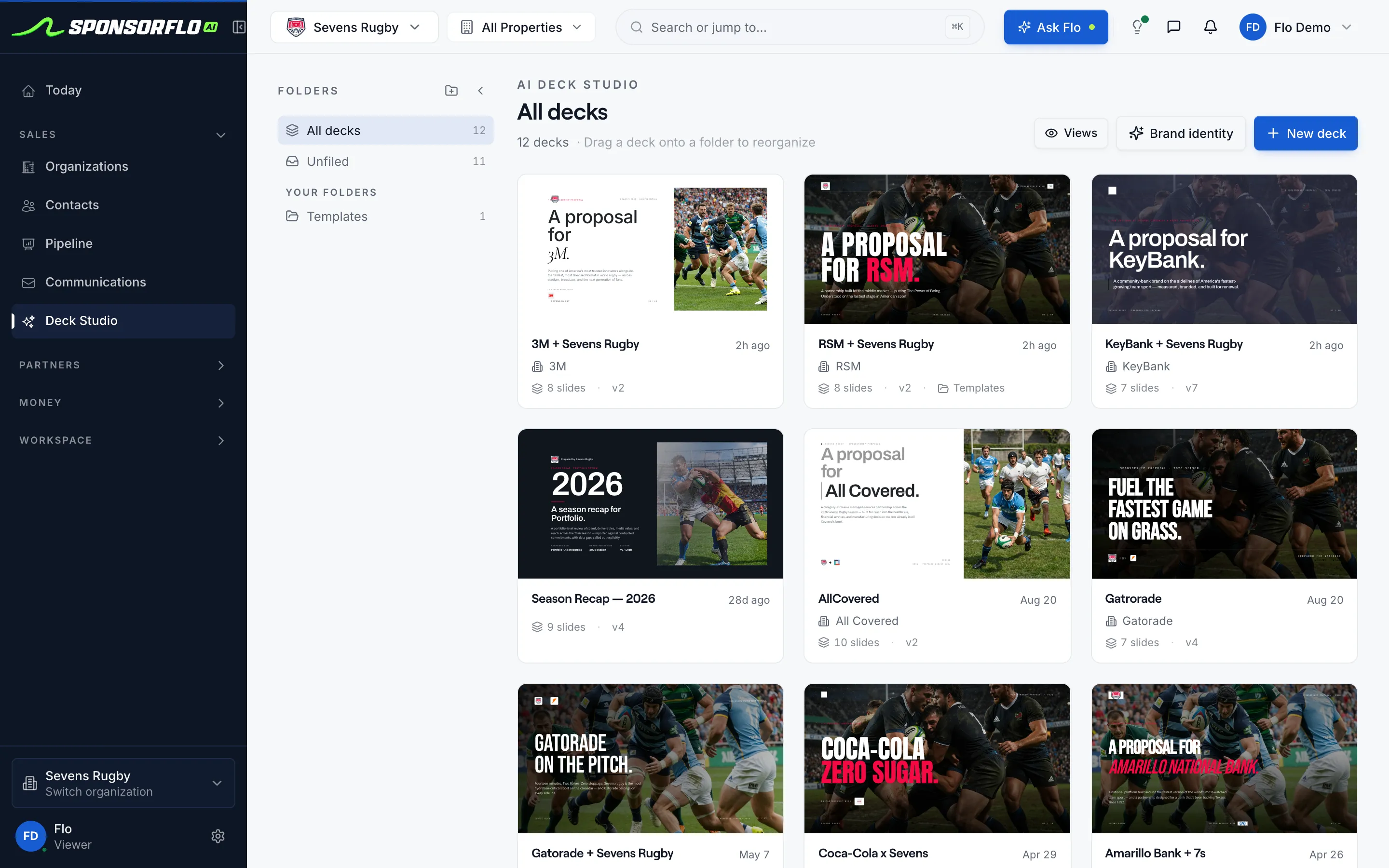
Personalization makes the opportunity feel concrete rather than theoretical. In SponsorFlo, Deck Studio uses AI to build a branded sponsorship deck from your inventory and brand identity. You can drop a sponsor's logo onto your own venue and signage photos to generate mockups that show exactly what their sponsorship would look like. Each deck is sent as a tracked link, so you can see who opened it and how many times they viewed it before you follow up.
Why should you research past conference sponsors?
Companies that have already sponsored conferences in your industry are the easiest prospects to qualify because they have a history of allocating budget to this channel.
Look at competitor events, industry association events, and regional trade shows to build a prospect list. Check event websites from the past two years for sponsor logos, browse LinkedIn for posts tagged with the conference hashtag, and review press releases that announce sponsorship deals. This research takes time but produces higher-quality leads than cold outreach to companies with no conference sponsorship history.
Which brands should you target beyond past sponsors?
Look for brands that are actively marketing to the same audience you attract, even if they have never sponsored your specific event.
If your conference serves healthcare IT directors, companies that advertise in healthcare IT publications or exhibit at HIMSS are strong candidates. LinkedIn and job boards are useful signals as well. A company hiring a field marketing manager or an event marketing lead is likely planning to increase its event spend in the coming year.
What should a conference sponsorship email lead with?
Lead with a clear description of who attends your event. It is the single most persuasive element in any sponsorship email.
If you have a confirmed keynote speaker or a notable track, mention it early. Sponsors respond to specifics, such as a named speaker, a job-title breakdown, or a registration trend, more than they respond to vague promises of exposure.
Which activations help close bigger conference deals?
The activations that close bigger deals give the sponsor something they can photograph and share on their own channels: a branded lounge, a charging station with their logo, a demo pod for live product sessions, or a sponsored coffee cart. Standard logo placement on a banner is table stakes.
Think about what your venue allows and build activation add-ons that sponsors can purchase on top of their base tier. A branded photo booth or a hackathon prize package adds incremental revenue from each sponsor who buys it.
Which outreach channels work for conference sponsors?
Email is the starting point, but sponsorship deals rarely close from a single cold email. Combine a personalized email with a LinkedIn connection request, a follow-up phone call, and an in-person introduction at an industry meetup if possible.
Each touchpoint should add new information, such as a link to your deck, a venue walkthrough video, or a case example from a past sponsor. Match the outreach channel to the buyer's role. A VP of marketing may respond on LinkedIn; a conference-sponsorship manager may prefer email with an attached deck they can forward internally.
How early should you start looking for conference sponsors?
Start nine to twelve months out. Corporate sponsorship budgets are typically set during the company's annual planning cycle, so if you start outreach three months before the event, most budgets are already committed elsewhere.
Have your packages and deck ready as soon as the previous year's event ends. Use the momentum of a successful event, with fresh photos, attendee feedback, and sponsor testimonials, to open conversations for the next year while the experience is still top of mind.
When should you follow up with a conference sponsor?
Follow up when the prospect is actively evaluating: knowing that a prospect opened your deck three times yesterday tells you today is the right day to call. Without that signal, you are guessing at timing and often reaching out too early or too late.
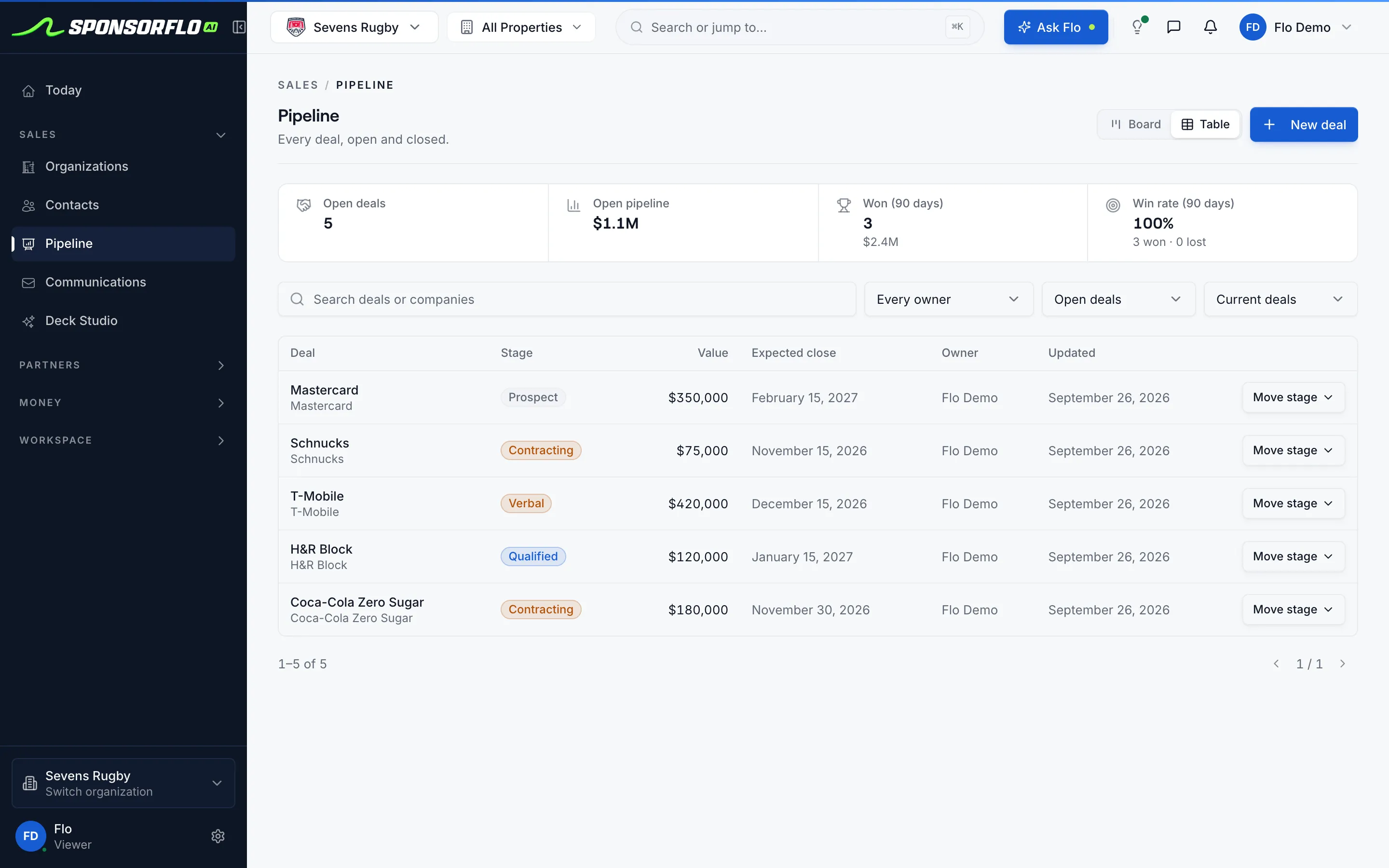
SponsorFlo sends decks as tracked links that report views, so you can see which sponsors opened your proposal and who to follow up with today. Pairing that with a pipeline that tracks each deal's stage, value, expected close date, and owner keeps your team focused on the prospects most likely to close.
What proof of performance do conference sponsors need?
Sponsors need a recap report that shows booth traffic, session attendance, logo impressions, social mentions, and leads collected. The biggest reason sponsors do not renew is that they never received a clear accounting of what they got for their money.
That recap gives sponsors the internal justification they need to approve next year's budget. In SponsorFlo, deliverables track status, due date, priority, delivered impressions, and proof attachments such as photos, links, and video clips. This makes it straightforward to compile a proof-of-performance report for each sponsor after the event closes.
How do you renew conference sponsors?
After you deliver your proof-of-performance report, schedule a renewal conversation within two to four weeks while results are fresh. Renewal is where conference sponsorship revenue compounds, because a returning sponsor reduces the cold prospecting you need to do.
A sponsor who signs a multi-year agreement or returns each year is the most efficient revenue you have. Offer an early-bird renewal rate with a real deadline. Upsell returning sponsors into a higher tier by showing the incremental value they would have received at the next level, such as more booth space, a session slot, or exclusive branding on the networking reception.
Which tools help you get conference sponsors?
SponsorFlo gives conference organizers a single place to build decks, track proposals, and manage deliverables through the full sponsorship cycle.
Inventory and packages
Organize your sellable assets, such as booths, sessions, receptions, and signage, with category, tier, price, and availability so every deck pulls from the same source of truth.AI-built sponsorship decks
Deck Studio uses AI to build a branded deck from your inventory and brand identity, with sponsor logo mockups on your own venue and signage photos.Pipeline and agreements
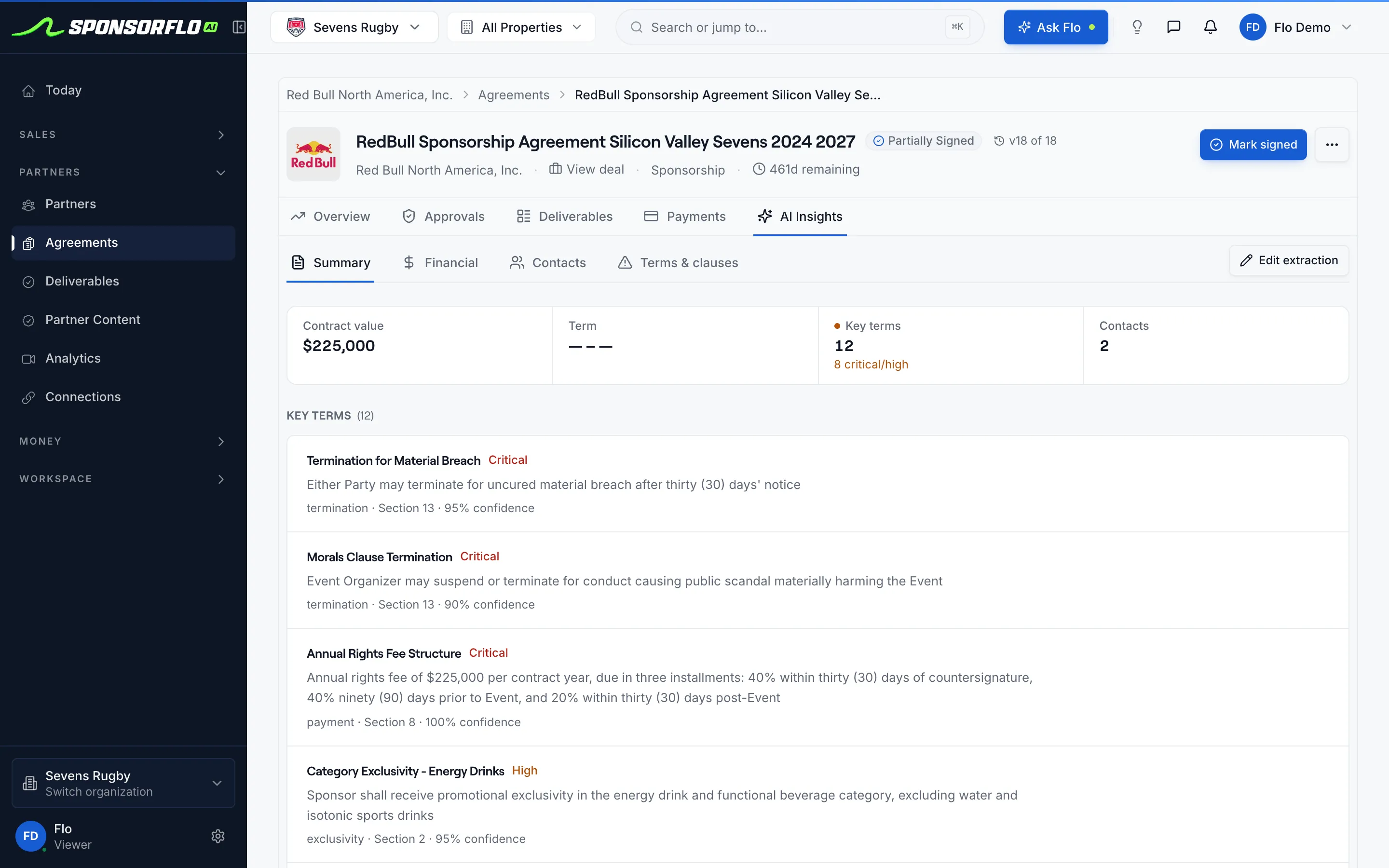
Track every deal with its stage, value, expected close date, and owner. Upload a contract and AI extracts terms and deliverables so nothing is missed.Deliverables and proof
Track each deliverable's status, due date, impressions, and proof attachments (photos, links, files, or clips) so your post-event recap is mostly assembled before you start writing it.
What are the most common conference sponsorship mistakes?
The three most common mistakes are starting outreach too late, sending the same deck to everyone, and skipping proof of performance after the event.
Starting outreach too late
Reaching out two to three months before the conference means you are competing for budget that has already been allocated. Most companies plan their event sponsorship spend during annual planning, which happens six to twelve months ahead.Instead: Begin your sponsor outreach nine to twelve months before the event. Have your packages and deck ready immediately after the previous conference ends, while results and energy are fresh.Sending the same deck to everyone
A generic proposal that does not reference the sponsor's product, goals, or target audience is easy to delete. Personalization signals that you understand the sponsor's business and have thought about what the partnership would look like for them.Instead: Customize each deck to reference the sponsor's product category, include a logo mockup on your signage, and call out the specific attendee titles they want to reach.No proof of performance after the event
When a sponsor never receives a recap showing what they got (booth visitors, session attendees, logo impressions, leads), they have no data to justify renewing. The result is a one-year relationship that could have been five.Instead: Deliver a proof-of-performance report within two weeks of the event that includes impressions, engagement numbers, and photos of the sponsor's booth and signage in action.
What is a four-week conference sponsorship action plan?
Use this four-week framework to start landing conference sponsors for your next event: build your profile and packages, research prospects, send personalized outreach, then follow up and close.
| When | Step | What to do |
|---|---|---|
| Week 1 | Define your profile and build packages | Identify the industries, company sizes, and roles that match your audience. Build three to five tiered packages with clear pricing and deliverables. |
| Week 2 | Research and build your prospect list | Review past sponsors of competitor events, identify industry-aligned brands, and find the right contacts at each company. |
| Week 3 | Send personalized outreach | Send customized decks that lead with attendee data and include sponsor logo mockups. Use email, LinkedIn, and phone to reach each prospect through multiple channels. |
| Week 4 | Follow up and close | Follow up with prospects who viewed your deck, answer objections, negotiate terms, and move deals to a signed agreement. |
How to get conference sponsors
Getting conference sponsors means packaging your event's audience access, activation opportunities, and proof of performance into tiered offers that brands can evaluate against their marketing goals. This guide covers the full cycle—from defining your ideal sponsor profile through post-event renewal—for tech summits, academic conferences, and trade shows.
Conference sponsorship
Conference sponsorship is a paid partnership in which a brand funds part of a conference—a keynote, a booth area, a reception, or the event itself—in exchange for audience access, branding, and measurable marketing outcomes such as leads, impressions, or product demos.
What do conference sponsors actually pay for?
Conference sponsors pay for access to a concentrated audience they cannot reach as efficiently through other channels. A 1,500-person developer summit puts a cloud platform vendor in front of engineering decision-makers for two days straight—something that would take months of outbound sales calls to replicate. The booth, the session slot, and the logo on the lanyard are delivery mechanisms for that access, not the product itself.
The most successful conference organizers frame their packages around outcomes rather than assets. Instead of listing 'logo on website' as a line item, they describe '200 qualified leads from badge scans at your booth' or 'a 30-minute workshop with 150 attendees who match your ICP.' This framing makes it easier for a sponsor's marketing team to justify the spend internally because they can tie it to pipeline or brand-awareness targets.
How do you price conference sponsorship packages?
Pricing a conference sponsorship package starts with understanding the value of your audience to the sponsor. A conference that draws 500 C-suite healthcare executives commands a higher per-attendee price than a 5,000-person consumer expo, because the audience is harder to reach and has more purchasing authority. Most organizers set prices by benchmarking comparable events in the same industry and region, then adjusting for their own audience size and composition.
A common structure uses three to five tiers. A title or presenting sponsorship is priced at the top and sold to one buyer with category exclusivity—meaning no direct competitor can sponsor the event. Session or workshop sponsorships sit in the middle and are sold to several buyers, each branding a specific track. Booth-only packages form the entry-level tier and are priced to cover the cost of floor space, power, and Wi-Fi. The following ranges are typical starting points to adjust for your market:
- Title or presenting sponsor: $50,000 to $250,000 or more, depending on event size and exclusivity terms.
- Session or workshop sponsor: $10,000 to $50,000, with logo placement on session signage and app listings.
- Booth or exhibitor package: $2,000 to $15,000, covering a defined floor area with power and load-in access.
- Reception or networking sponsor: $5,000 to $25,000, branding a happy hour, dinner, or coffee break.
How early should you start looking for conference sponsors?
You should start your sponsorship outreach nine to twelve months before the event. Corporate marketing budgets are set during annual planning cycles, which often happen in Q3 or Q4 for the following calendar year. If you wait until three months out, most potential sponsors have already allocated their event budgets to other conferences.
The ideal cadence is to have your packages ready immediately after the previous year's event ends. Use the momentum—fresh event photos, attendee feedback, and sponsor engagement data—to open renewal conversations within two weeks of closing the current conference. New prospect outreach should begin no later than nine months before the next event date, with an early-bird deadline that creates urgency for commitments made in the first 60 days.
What should a conference sponsorship deck include?
A conference sponsorship deck should include six elements: an overview of the event and its mission, a detailed attendee profile with job titles and industries, the sponsorship tiers with pricing and deliverables, photos or mockups showing what the sponsor's branding would look like on-site, social proof from previous events such as attendance numbers and engagement metrics, and a clear next step—usually a call or a reply to discuss a custom package.
Personalization makes a measurable difference. Adding the prospect's logo to a photo of your booth area or main-stage backdrop shows them exactly what the partnership would look like, rather than asking them to imagine it. In SponsorFlo, Deck Studio generates these mockups by placing a sponsor's logo on your own venue and signage photos, and each deck is sent as a tracked link so you can see when the prospect opens it.
How do you prove ROI to conference sponsors?
You prove ROI to conference sponsors by delivering a post-event report that ties their investment to measurable outcomes: booth visitors, session attendance, badge scans or leads collected, social media mentions, logo impressions from signage and digital screens, and any media coverage that featured their brand. The report should arrive within two weeks of the event, while the experience is still fresh and before the sponsor's team moves on to other priorities.
Collecting this data requires planning before the event, not after. Set up badge scanners at booth entrances, track session registrations by sponsor, capture photos of every deliverable in action, and log social posts that tag or mention the sponsor. In SponsorFlo, each deliverable records its status, due date, delivered impressions, and proof attachments—photos, links, files, or video clips—so compiling the recap report is a matter of exporting what you already tracked rather than scrambling to reconstruct it.
What is the difference between conference sponsorship for tech, academic, and trade show events?
Tech conferences typically sell to SaaS vendors, cloud platforms, and developer-tool companies. The audience is technical, so sponsors value hands-on activations like demo pods, hackathon prizes, and workshop slots where they can show their product in use. Attendee job titles—senior engineer, VP of engineering, CTO—are the primary selling point in the deck.
Academic conferences sell smaller booth packages to vendors—publishers, lab-equipment suppliers, academic software companies—and often include advertising in conference proceedings or the program booklet. Pricing is typically lower per sponsor because attendees are researchers and students rather than high-budget purchasers, but volume can compensate when dozens of vendors each take a table.
Trade shows sell lead-generation packages where the booth is the primary product. Sponsors pay for floor position, booth size, and access to the attendee list. The deck should emphasize foot traffic patterns, lead-retrieval technology, and the number of qualified buyers who attended the previous year.
How do you renew conference sponsors year over year?
Renewals start with proof of performance delivered promptly after the event, followed by a renewal conversation within two to four weeks. The goal of the renewal meeting is to review results, discuss what the sponsor would change, and present the next year's packages with an early-bird incentive for committing before a specific date.
Offering a multi-year agreement at a discounted rate locks in revenue and reduces your annual prospecting burden. Upselling returning sponsors into a higher tier works best when you can show the incremental value—more booth space, a session slot, or exclusive branding on the networking reception—that they missed by staying at their current level.
- Conference sponsorship packages — tier examples and sample pricing
- Conference sponsorship software — deck, pipeline, and deliverables in one platform