
Pricing
How to value sponsorship assets: set prices sponsors will pay.
Sponsorship asset valuation turns the benefits you offer — signage, logo placement, hospitality, digital inventory — into prices you can defend in a sponsor meeting. This guide covers four common methods so you can price every asset in your inventory with confidence.
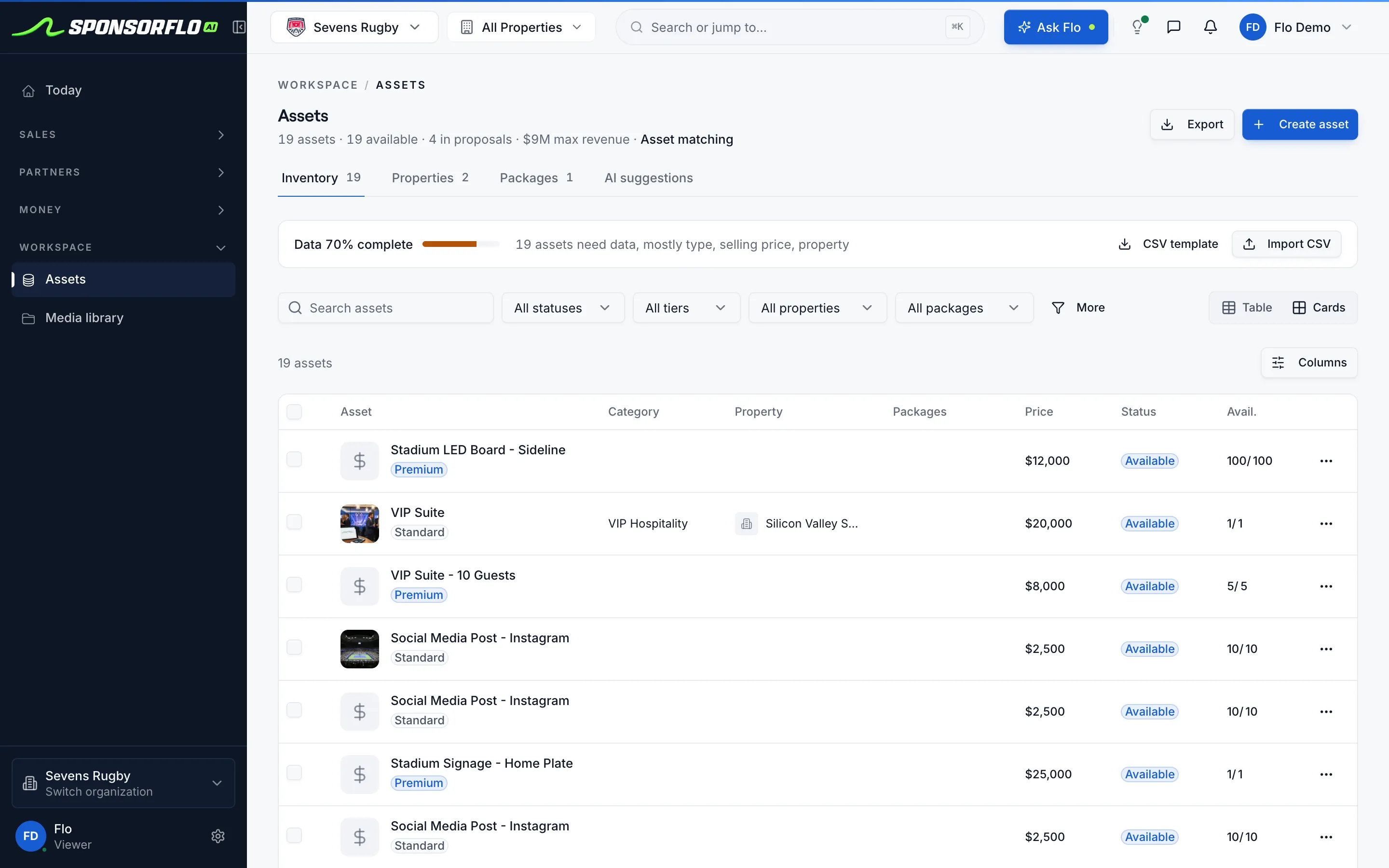
How do you value a sponsorship asset?
Choose one of four methods based on the type of asset and the data you have available. Most teams use impression-based pricing for digital inventory and audience-value pricing for in-person experiences.
Impression-based (CPM)
Use this when you have a verified audience count. Multiply (CPM ÷ 1,000) × impressions × the number of flights to reach a starting price. These are typical ranges you should adjust for your market.
Audience value
Use this when the quality of the audience matters more than its size. A 40-person executive dinner commands a higher price per attendee than a general-admission gate because sponsors are paying for direct access to decision-makers.
Cost-plus
Use this when you need to cover operational costs for a season or event. Divide your total costs by the number of sponsors you expect to sell, then add a margin you can explain to a buyer.
Exclusivity premium
Add an exclusivity surcharge only if you will actively refuse the next brand in that category for the full sponsorship term. The premium reflects the scarcity you are guaranteeing.
How it works
Name the asset
Identify the specific sponsorship asset you want to value, such as a jersey patch, a booth at your event, or a mid-roll podcast read.
Choose a valuation method
Use one of four approaches — impression-based CPM, audience value, cost-plus, or exclusivity premium — based on the data you have available.
Present the price on your deck
Place the price next to a mockup of the asset so sponsors can see exactly what they are buying and what it costs.
Before you finalize your price
Walk through this checklist to make sure every number you present to a sponsor is backed by real data and consistent across your proposal and agreement.
- 1Can you show the asset to a sponsor with a photo, a file, or a report you already produce?
- 2Is your audience count based on verified data — a gate scanner, a hosting platform, or analytics — rather than an estimate?
- 3If you are charging an exclusivity premium, have you defined the category and assigned someone to enforce it?
- 4Does the price on your proposal deck match the line item in your sponsorship agreement?
Watch SponsorFlo run a sponsorship season
See Sevens Rugby move from inventory and research through Deck Studio, agreements, deliverables, and renewals — the full seller season in one walkthrough.
When to use each method: match the method to the asset.
Every sponsorship asset has a valuation method that fits best, depending on whether you are selling reach, access, or scarcity.
Provable inventory
Gate counts, podcast downloads, or event photos give you a defensible floor for your asking price.
High-value audiences
When your audience is the product — like a C-suite dinner — price the quality of the room, not the headcount.
Category exclusivity
Add an exclusivity premium only when you can commit to keeping that sponsor category clean for the entire term.
Questions
What is sponsorship asset valuation?
Sponsorship asset valuation is the process of determining a fair price for each sponsorship benefit you sell, such as logo placement, signage, or a speaking slot. You arrive at the price by combining measurable audience data with the strategic fit the asset offers a sponsor.
How do I price an asset I have never sold before?
Start from comparable inventory and the metrics you can actually report, such as attendance, video views, or social impressions you already measure. Price the tier based on those numbers, then test it in a real conversation with a prospective sponsor.
Should I show the valuation formula in my proposal?
Show the price and a clear description of the asset, but keep the formula internal. Sponsors care about what they get and what it costs, not the math behind the number.
Where should I record the final price?
The price belongs on the package slide in your proposal and in your sponsorship agreement so both sides reference the same number throughout the deal.
Price your assets, then build the deck.
SponsorFlo Deck Studio turns your inventory and prices into a branded proposal you can send as a tracked link. Explore Deck Studio or book a walkthrough.